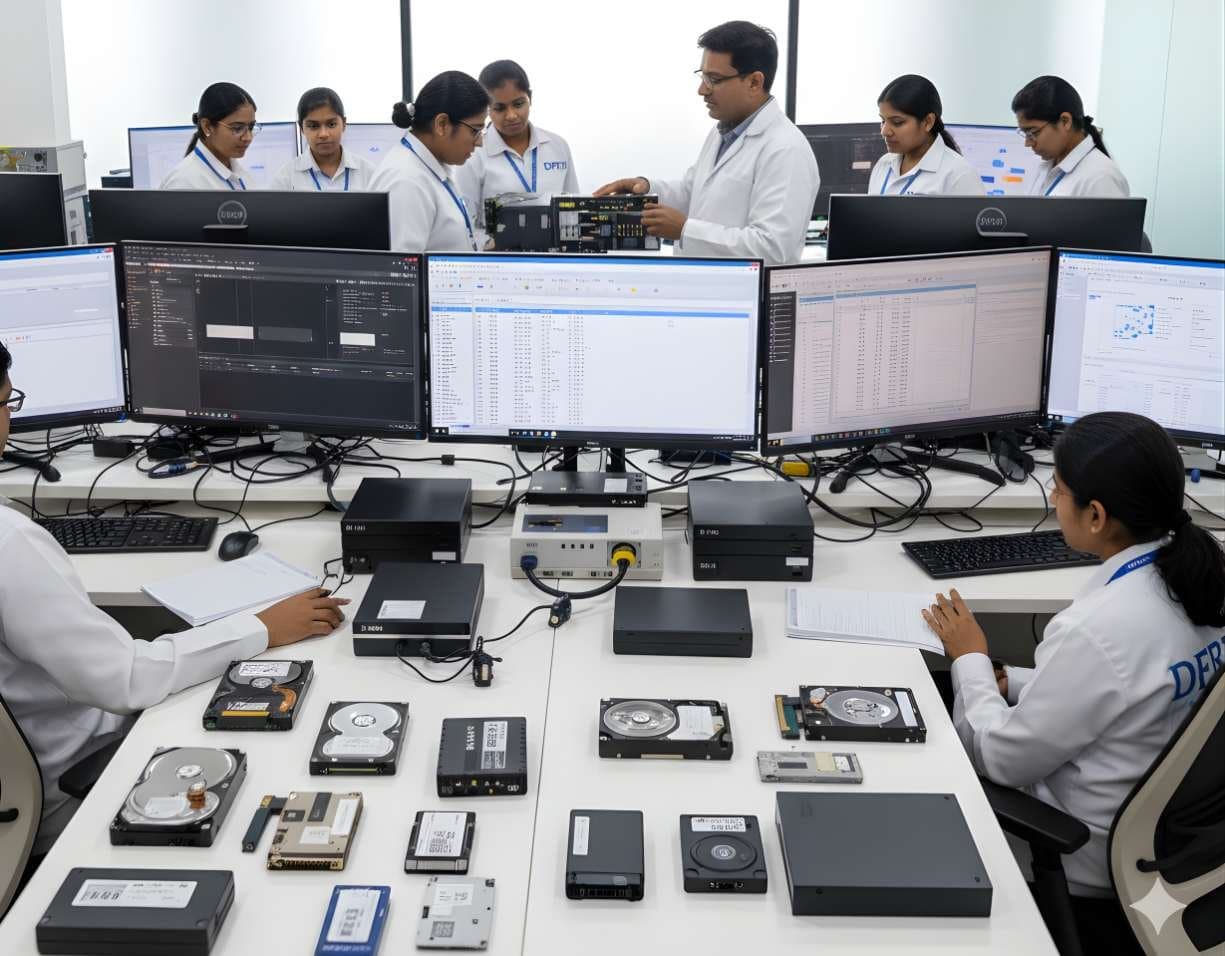
 StorageDigital Storage ForensicsHDD ForensicsImage hard drives through a write-blocker, find hidden areas and recover deleted data.
Data Recovery Specialist
The data recovery specialist gets data back from drives that no longer work. In a forensic setting the same skill recovers evidence from damaged exhibits, with the added duty of changing nothing that need not change.
Career guide8 skills5 courses
What the work is
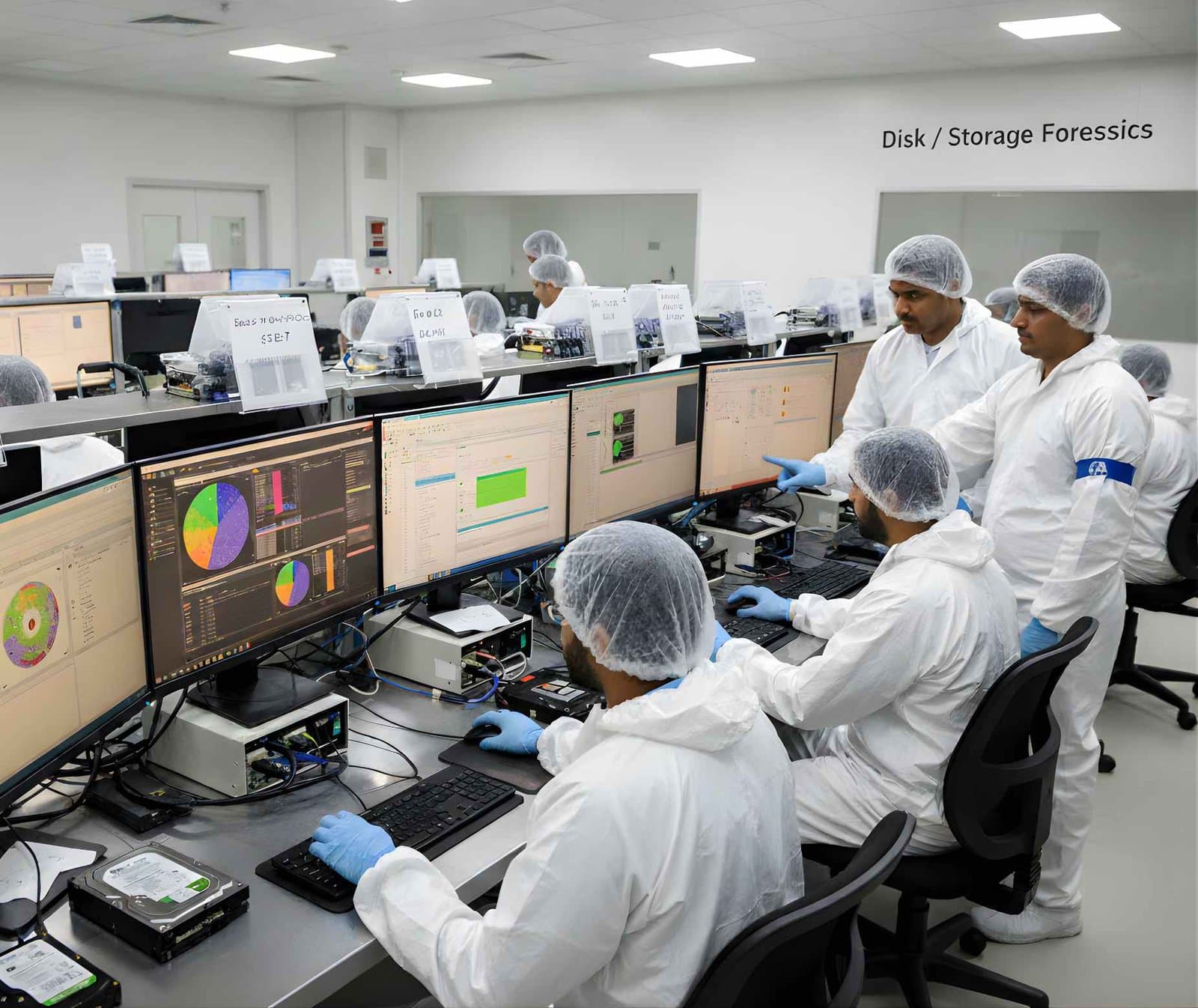
- Diagnoses failed hard disks, SSDs, pen drives and memory cards: electronic, firmware, mechanical or logical.
- Uses PC-3000 and similar systems to read firmware, work around bad sectors and image unstable drives sector by sector.
- Carries out head swaps and platter work in a clean environment where the mechanics have failed.
- Reads NAND chips directly and reassembles data through the flash translation layer when a controller is dead.
- Rebuilds RAID and NAS arrays from member disks and repairs file systems after corruption.
- Documents each step so that a recovered file can be trusted and, in forensic work, its origin can be shown.
- Tells the client what is possible, how long it may take and what is lost, plainly.
Skills to build
- Hard disk architecture: firmware, service areas, heads, platters and translators
- SSD and flash internals: controllers, wear levelling, TRIM and encryption, and what each means for recovery
- Soldering and fine hardware work for chip-off and board repair
- File system repair across NTFS, FAT, exFAT, ext4, HFS+ and APFS
- RAID layouts and array reconstruction
- Forensic imaging discipline so that recovery and evidence integrity go together
- Knowledge of NIST SP 800-88 Rev. 2 to understand what properly sanitised media can and cannot give back
- Patience and honesty with clients about the odds on a given fault
Tools you will meet
How the role grows
Stages, not promises. Titles differ between employers and the time each stage takes depends on the cases you get to work on.
- 01Recovery Technician
Handles logical recoveries and straightforward imaging, learns diagnosis and watches the senior engineers on hardware work.
- 02Data Recovery Specialist
Takes firmware, bad-sector and flash cases on your own, with the clean-room work under a senior.
- 03Senior Recovery Engineer
Specialises in firmware, mechanical or NAND recovery, solves the cases others returned and trains the team.
- 04Lab Head or Forensic Recovery Consultant
Runs the lab or advises forensic units and companies on recovering evidence from damaged media without compromising it.
Start at DFRTI
StorageDigital Storage ForensicsHDD ForensicsImage hard drives through a write-blocker, find hidden areas and recover deleted data.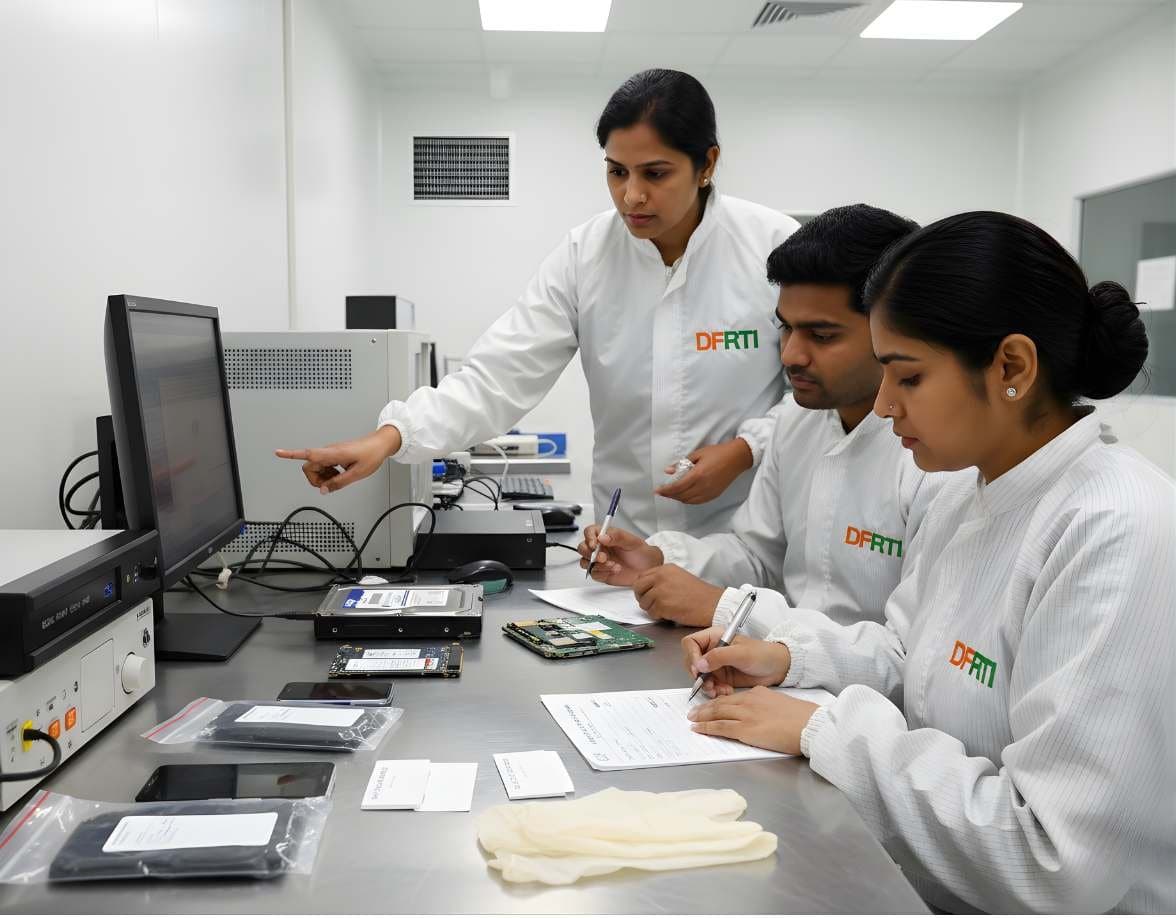 StorageDigital Storage ForensicsSSD / NVMe ForensicsHow TRIM, garbage collection and wear levelling change evidence on SSD and NVMe drives.
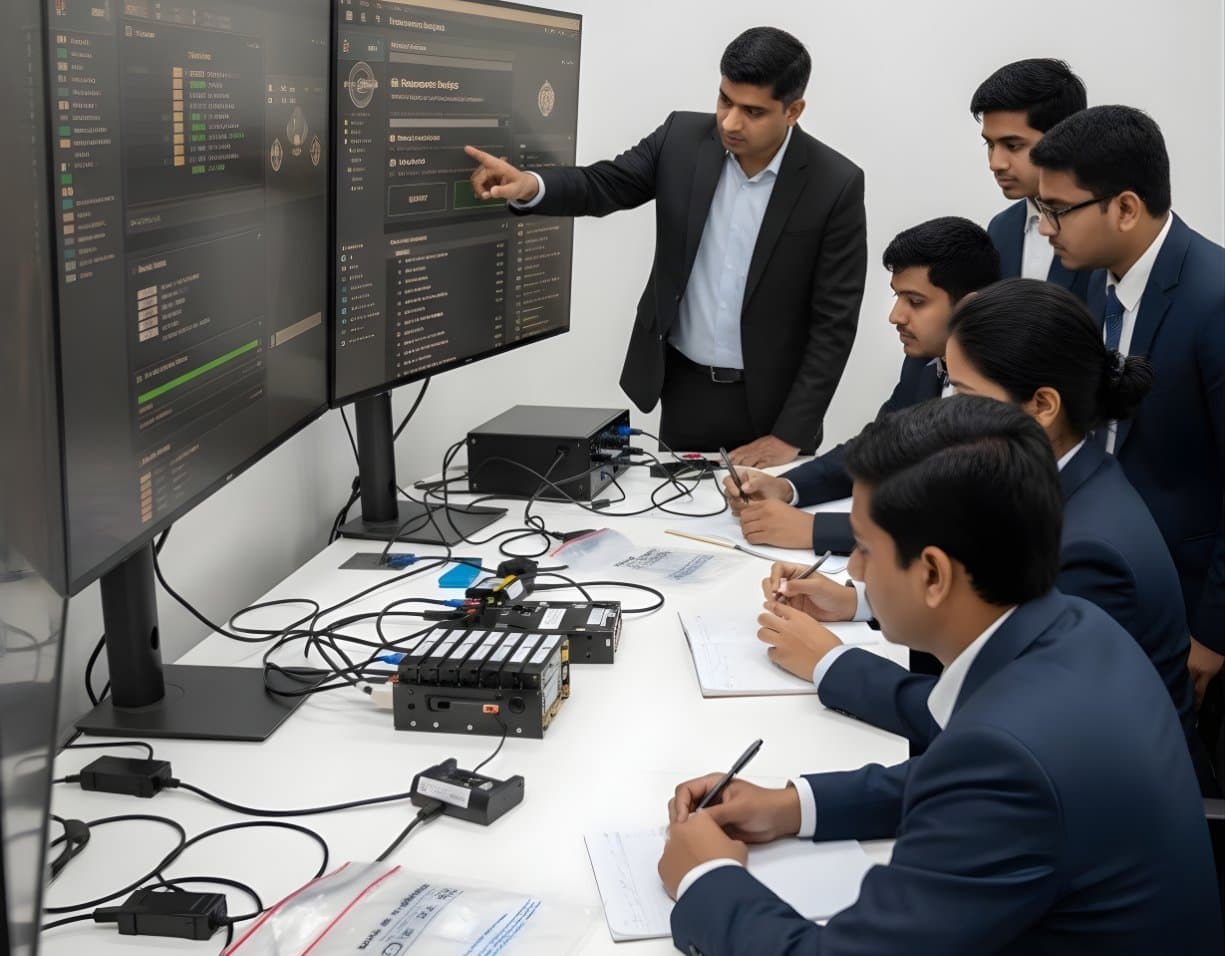 StorageDigital Storage ForensicsRAID / NAS ForensicsImage RAID members, rebuild arrays virtually and examine NAS boxes after ransomware.
 StorageDigital Storage ForensicsUSB / Pen Drive ForensicsExamine pen drives and memory sticks and prove which USB device touched which computer.
 StorageDigital Storage ForensicsFile System AnalysisRead NTFS, FAT, exFAT, ext4 and APFS at the structure level and build timelines.
Disciplines to read first
Questions people ask
Is data recovery part of digital forensics?
They overlap. Data recovery aims to give the data back. Forensics aims to prove what the data shows and how it was obtained. A forensic recovery uses recovery technique under forensic rules: write protection, hashing and records.
Do I need electronics training?
For firmware and mechanical work, yes, at least a working knowledge and steady hands. Logical recovery and file system repair can be learnt from a computing background. Most specialists grow into the hardware side over time.
Where does DFRTI fit?
HDD Forensics and SSD / NVMe Forensics teach the storage internals that recovery depends on, in a forensic framing. RAID / NAS Forensics covers array reconstruction.
Can everything be recovered?
No. Overwritten data, properly sanitised media and some encrypted or damaged flash cannot be brought back. Part of the job is knowing this early and telling the client.
Career guides describe typical work and skills. They do not promise employment, placement or a salary, and roles vary between employers and countries.
Ready to start?
Tell a counsellor where you are today. They will suggest the first course and the track that leads to this role.