 StorageDigital Storage ForensicsUSB / Pen Drive ForensicsExamine pen drives and memory sticks and prove which USB device touched which computer.
ACE Lab
PC-3000 Flash
The PC-3000 Flash reads raw NAND memory chips and rebuilds the user data that a dead or damaged controller can no longer present.
HardwareCommercialCurrentHardware
Profile
- Manufacturer
- ACE Lab
- Category
- Storage and hardware
- Product type
- Hardware
- Platforms
- Hardware
- Licensing
- Commercial
- Product status
- Current
- Educational level
- Advanced
- Last verified
- 2 November 2026
What PC-3000 Flash is
A USB stick or memory card is a NAND chip plus a controller. When the controller fails, the chip still holds the data, but scrambled by the controller's own rules. The PC-3000 Flash is ACE Lab's system for that case. The hardware is the PC-3000 Flash Reader 4.0, connected over USB, with adapters for chip packages such as TSOP-48, LGA and BGA and a Multiboard with replaceable modules. For monolithic devices, where chip and controller are one sealed block, the Spider Board Adapter connects to the technological test points so the chip does not have to be cut out.
The software is where the real work happens. A raw NAND dump is not a file system. The examiner must undo error correction, remove XOR scrambling, join the chip's pages and blocks in the right order and rebuild the translator that maps logical to physical blocks. ACE Lab supplies ECC and XOR libraries, a set of preparation techniques that emulate the controller's transformations and algorithms that assemble a full image of the file system. The Solution Center offers an automated path for known controllers, while unknown ones need manual analysis.
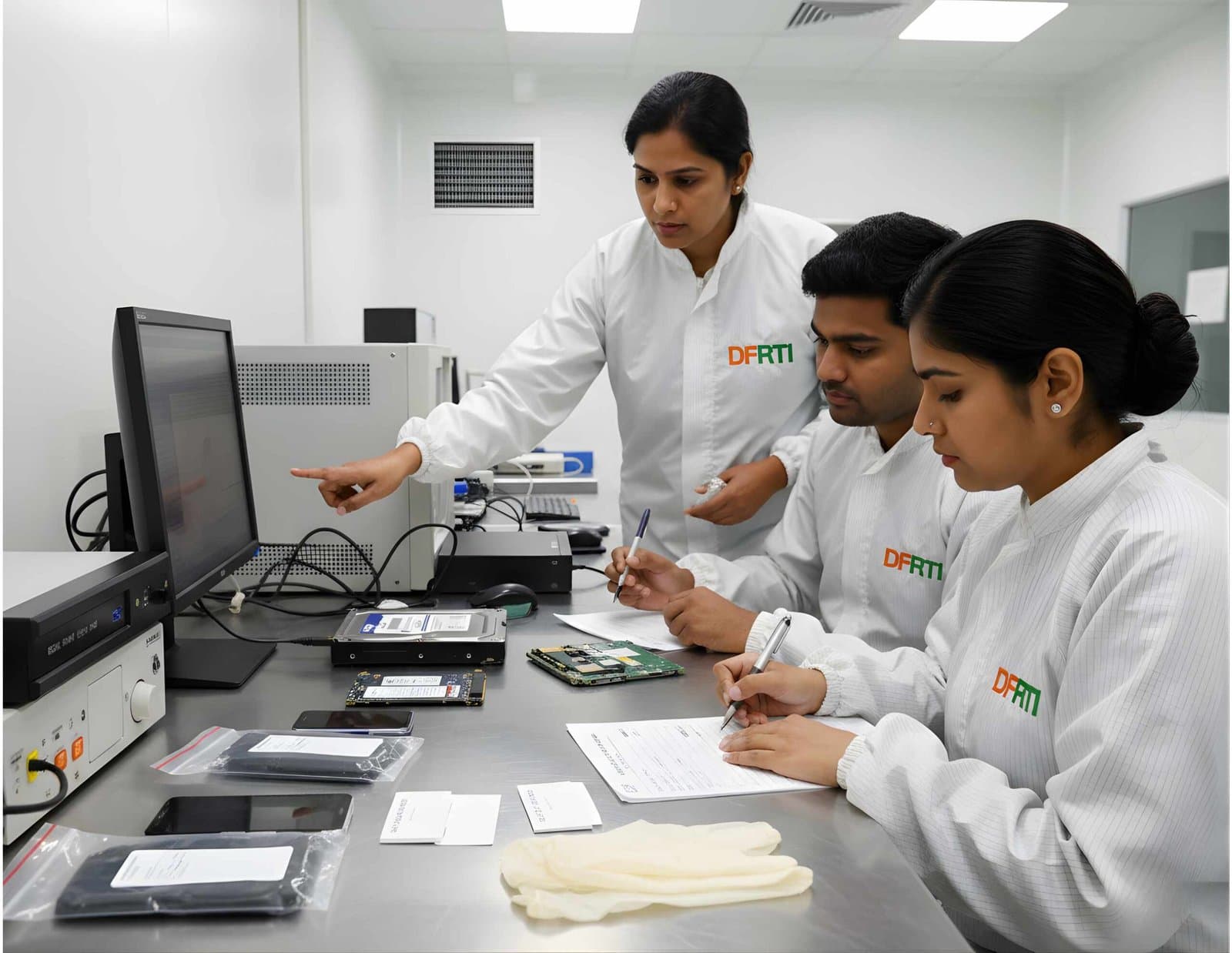
Primary applications
Where it is used
- Recovering data from USB flash drives and memory cards with a failed controller
- Chip-off acquisition after desoldering a NAND chip from a device
- Monolithic card and USB stick access through the Spider Board Adapter
- Rebuilding the translator and assembling a file system image from raw dumps
- Logical recovery from flash media without disassembly when the controller still works
- Research into NAND controller behaviour and scrambling methods
Who uses it
- Flash data recovery specialists
- Mobile and embedded device forensic examiners
- Forensic laboratories with a chip-off bench
- Hardware security researchers
Capabilities and limits
Major capabilities
- PC-3000 Flash Reader 4.0 with USB connection to the workstation
- Adapters for TSOP-48, LGA and BGA chip packages and a Multiboard with replaceable modules
- Spider Board Adapter for monolithic devices without soldering to the pinout
- Downloadable ECC and XOR libraries plus a dynamic XOR library
- Preparation techniques that emulate controller transformations
- Image assembly algorithms that produce a mountable file system
- Solution Center automation for recognised controller types
- Supports USB flash, SD, microSD, MMC, CF, Memory Stick, xD and monolithic media
Technical limitations
- Chip-off is destructive. Once a chip is removed the device will not work again, so the decision needs authority and a record
- Encrypted controllers and hardware-encrypted devices do not yield readable data from a raw dump
- Unknown or new controllers may need days of manual analysis with no guarantee of a result
- Soldering and chip handling skills are needed before the software can be used at all
- Multi-chip devices with interleaving need the correct order and settings, which is easy to get wrong
Learning with DFRTI
Independent professional education covering the principles and workflows of PC-3000 Flash. DFRTI is not a vendor training centre and its courses are not vendor certifications.
Before you learn it
- NAND memory structure: pages, blocks, spare areas and error correction
- How flash controllers wear-level, scramble and map data
- Soldering and rework skills for chip removal and cleaning
- Vendor training on the PC-3000 Flash software
Disciplines
Related tools
- PC-3000 Portable PROThe PC-3000 Portable PRO is ACE Lab's field unit for working with damaged hard drives and solid state drives. It is the portable branch of the PC-3000 family and the current generation after the Portable III.ACE Lab
- PC-3000 SSDPC-3000 SSD is the solid state drive module of the PC-3000 family. It runs on ACE Lab's hardware and gives the examiner access to the drive's technological mode, where the controller can be made to reveal user data it will no longer serve through the normal interface.ACE Lab
- Data ExtractorData Extractor is the software that turns a PC-3000 board or portable unit into an imager for drives that are unstable, slow or partly unreadable.ACE Lab
- MRT Ultra 3.0MRT Ultra is MRT Lab's multi-port recovery card. The current generation, released in 2026, is the MRT Ultra 3.0 Six-Port Card, used with the MRT data recovery software for firmware repair and imaging of hard drives.MRT Lab
Courses that cover this tool
StorageDigital Storage ForensicsUSB / Pen Drive ForensicsExamine pen drives and memory sticks and prove which USB device touched which computer.MobileMobile & IoT ForensicsSIM / Memory Card ForensicsICCID, IMSI and SMS from SIM cards, plus FAT and exFAT recovery from SD and microSD cards MobileMobile & IoT ForensicsIoT Device ForensicsEvidence from smart speakers, cameras, wearables and routers, plus firmware extraction basics
Official source
Product names and trademarks belong to their respective owners. DFRTI is an independent educational and research institute. Inclusion in this directory does not imply manufacturer endorsement, partnership or authorisation. Facts are checked against the manufacturer's public documentation on the date shown and may have changed since.
Go deeper with DFRTI
Free pages explain the ground. Structured courses, lab work and a mentor take you from knowing about it to doing it on a case.