 LegalFoundation & Legal CoursesBasics of Cyber ForensicsStart here. Evidence handling, imaging, hashing, chain of custody and your first analysis.
DFRTI Internship Programme
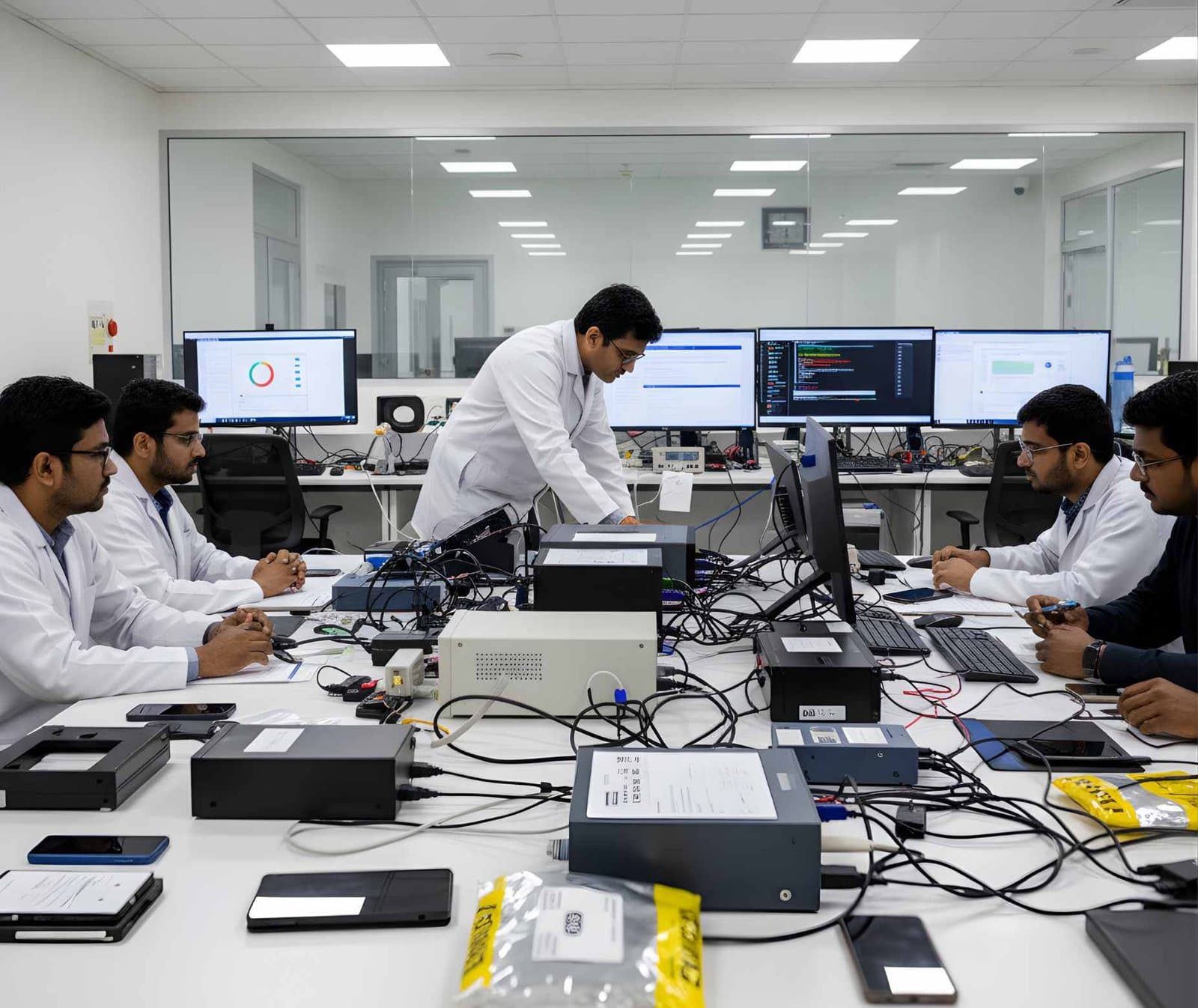
An internship at DFRTI is mentored lab work. You image, extract, analyse and write up practice cases, a mentor reviews each stage and you finish with habits a forensic lab can use.
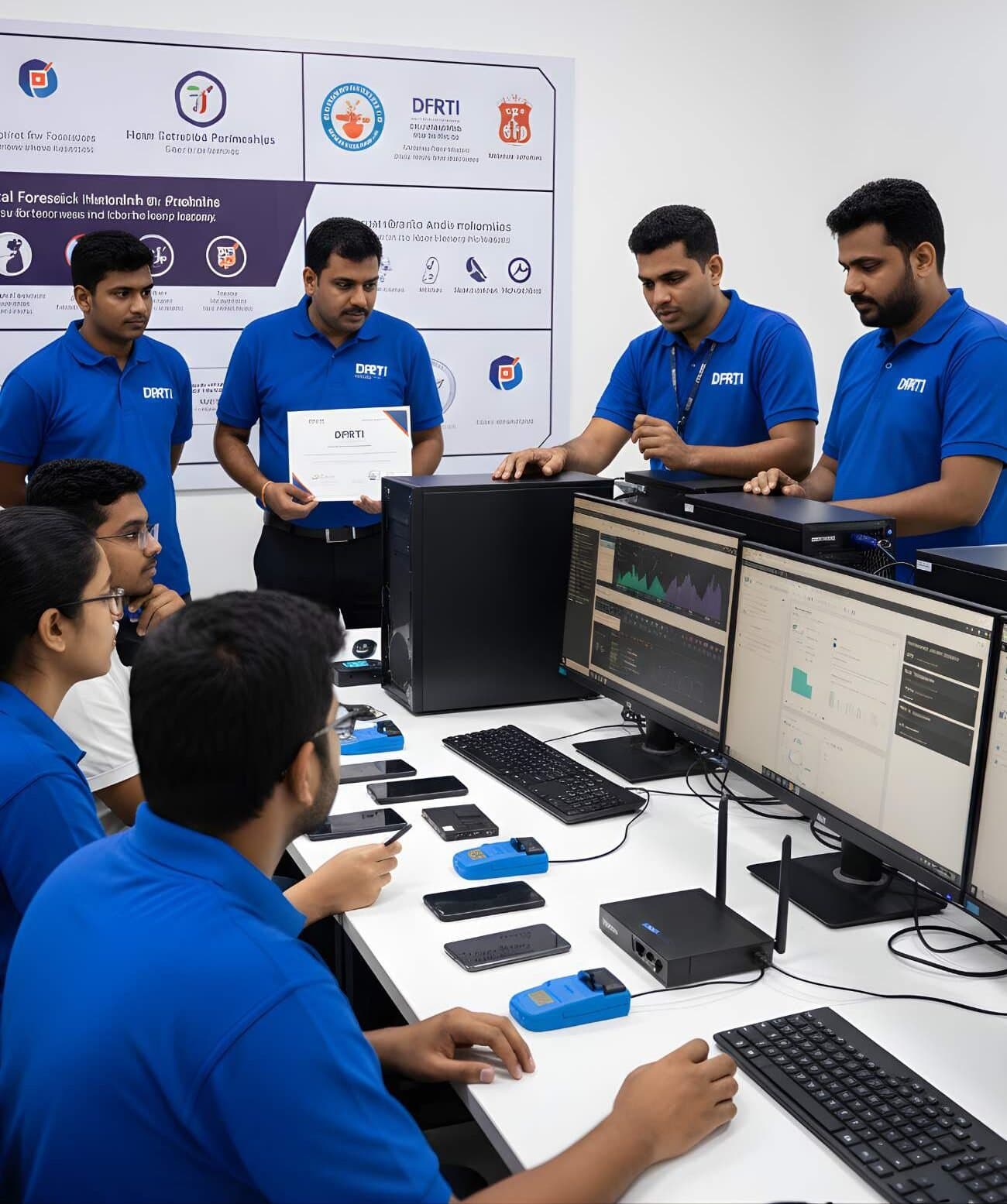
About the programme
The internship exists for one reason. Most people who finish a forensics course have never imaged a drive under time pressure, defended a hash mismatch to a senior or rewritten a report because the reader could not follow it. Those are the things a lab checks on your first day, and they are learnt only by doing them with someone watching.
You are matched with a mentor based on the area you want to work in, whether that is storage, mobile, network and cloud, incident response, video or the legal side of evidence. You then work through a series of practice cases that grow in difficulty. Your mentor reviews each stage, from the intake notes to the final report, and tells you plainly what to fix. The pace is set around your studies or work and agreed when you start.
DFRTI is an independent institute. The internship teaches method, not a vendor product, so you learn to check a tool rather than trust it.
Areas of learning
The seven DFRTI tracks are the seven areas an intern can work in. Most interns pick one and touch a second.
- Digital Storage Forensics
Imaging hard disks, SSDs and pen drives through write-blockers, verifying by hash, recovering deleted files and reading file systems.
- Mobile and IoT Forensics
Lawful extraction from Android and iOS test devices, decoding chats and app databases and handling SIM and memory cards.
- Network and Cloud Forensics
Reading packet captures, correlating logs and collecting cloud audit records with the authority trail recorded.
- Incident Response and Malware Analysis
Memory capture and analysis, triage of a compromised test system and reading what a malware sample did.
- Surveillance, Image and Video Forensics
Recovering DVR footage, correct playback, documented enhancement and the file-level checks that go into authentication.
- Advanced and Specialised Forensics
Open-source intelligence, cryptocurrency tracing, drone and vehicle data and where AI helps in sorting large evidence sets.
- Foundation and Legal
Chain of custody, evidence handling to ISO/IEC 27037:2012, report writing and how electronic evidence is treated in Indian courts.
Who can apply
The programme is for people at the start of a digital forensics career. A DFRTI course before the internship helps but is not required.
- Students of forensic science, computer science, IT, law or a related subject
- Fresh graduates who want practical forensic experience before their first job
- Early-career professionals from IT, security, law or policing who are moving into digital forensics
- Police officers and investigators who want hands-on time with evidence handling and extraction
- Anyone with basic computer knowledge, a real interest in digital evidence and the patience to document everything
- A willingness to follow lab rules, keep records and work only on authorised practice material
How to apply
- 01Enquire
Write to care@dfrti.com or call +91 85277 09690 and say you are interested in the internship.
- 02Share your background
Send a short note on your education, any experience, the area you want to work in and when you are available. A resume is enough if you have one.
- 03A short conversation
A mentor speaks with you about your interests and your current level so that the starting cases suit you. It is a conversation, not an examination.
- 04Confirmation
If a mentor in your area can take you on, DFRTI confirms the arrangement and the practice material you start with.
How interns are selected
Selection is not a marks cut-off. The conversation looks for a genuine interest in digital evidence, basic comfort with computers and the willingness to document and to be corrected. Those three predict whether an internship works far better than a grade sheet does.
Places depend on which mentors are available in the area you want. If no mentor can take you on at the time, DFRTI says so and suggests a course or a later start rather than leaving you waiting. Every applicant hears back either way.
What you will be able to do
By the end of the programme an intern who has met the completion requirements can do the following without being told how.
- Receive an exhibit, record its condition and start a chain of custody record that would survive a challenge
- Image storage media through a write-blocker, verify the image by hash and explain what a mismatch would mean
- Carry out a standard extraction on a test phone and check the output against the handset
- Recover deleted files, read file system metadata and build a simple timeline from them
- Separate what the evidence shows from what it suggests and write both down with the reasoning
- Write a report another examiner could follow and repeat, in plain English
- Say what a tool did not recover and why, instead of leaving the gap unmentioned
- Work within legal authorisation and the handling rules in ISO/IEC 27037:2012 as a matter of habit
Practical assignments
Assignments use practice evidence prepared for training. Nothing in the standard assignment set involves real people, real devices from a case or real client data.
- Image a prepared pen drive from a synthetic data theft scenario, verify the hash, recover the deleted files and write the acquisition notes
- Examine a prepared Windows disk image: user accounts, recent files, USB history and a timeline of one afternoon
- Extract and decode a test Android device, identify what the tool parsed and what it missed in an app database
- Analyse a packet capture from a staged intrusion and write the sequence of events for a non-technical reader
- Capture and analyse memory from a lab virtual machine running a known sample and list the indicators found
- Recover footage from a DVR image, play it back with the correct frame rate and document an enhancement step by step
- Trace a synthetic cryptocurrency transaction chain across test addresses and present the trail
- Write a final case report on one assignment and defend it in a review with your mentor
Completing the programme
An intern completes the programme by finishing the assignments agreed with the mentor to the standard the mentor sets, keeping case notes for each one, submitting the reports and passing a final review. The review is a conversation about your work in which the mentor checks that you understand why each step was done, not only that it was done.
Where an assignment does not pass, the mentor says what to fix and you resubmit. There is no limit on learning from a correction. The requirements are the same for every intern in an area, and they are agreed in writing at the start so that there is no doubt about what completion means.
The completion certificate
A DFRTI internship completion certificate is given when the completion requirements are met. It names the area you worked in and records that your assignments and final review were accepted by your mentor.
It is an institute certificate issued by DFRTI, an independent educational and research institute. It is not a government qualification, not a vendor certification and not one of the DFRTI certifications such as DCFA, DCMFE or DCNI, which have their own courses and assessments. It shows an employer what you have done, which is its purpose.
Common questions
Do I need to have done a DFRTI course first?
No. It helps, because the starting cases can be harder, but the conversation at the start sets the level. Tell us your background and the mentor picks the right first assignment.
Can I do the internship alongside college or a job?
Yes. The pace is agreed with your mentor around your studies or work. Hands-on work such as imaging and mobile extraction needs lab time, so discuss how you will manage that when you enquire.
Will I work on real cases?
The assignments use practice evidence prepared for training. Any exposure to live casework is at the discretion of your mentor, under supervision and under confidentiality, and it is never a condition of completing the programme.
Does DFRTI place interns in jobs?
No placement is promised. Mentors do give guidance on your next step, your resume and interview preparation, and the career guides on this site describe the roles the internship leads towards.
How do I apply?
Email care@dfrti.com or call +91 85277 09690 with a short note on your background and the area you want to work in.
Related courses
LegalFoundation & Legal CoursesBasics of Cyber ForensicsStart here. Evidence handling, imaging, hashing, chain of custody and your first analysis. StorageDigital Storage ForensicsUSB / Pen Drive ForensicsExamine pen drives and memory sticks and prove which USB device touched which computer.
 NetworkNetwork & Cloud ForensicsWireshark / Packet CaptureCapture, filter and read packets in Wireshark and tshark to recover what was sent.
 LegalFoundation & Legal CoursesLegal & Court ProceduresIndian law on electronic evidence: BSA Section 63, BNSS search and seizure and the IT Act.
Not sure this is the right one for you?
Tell us your background and what you want to do next. A counsellor will suggest a course and the next batch.