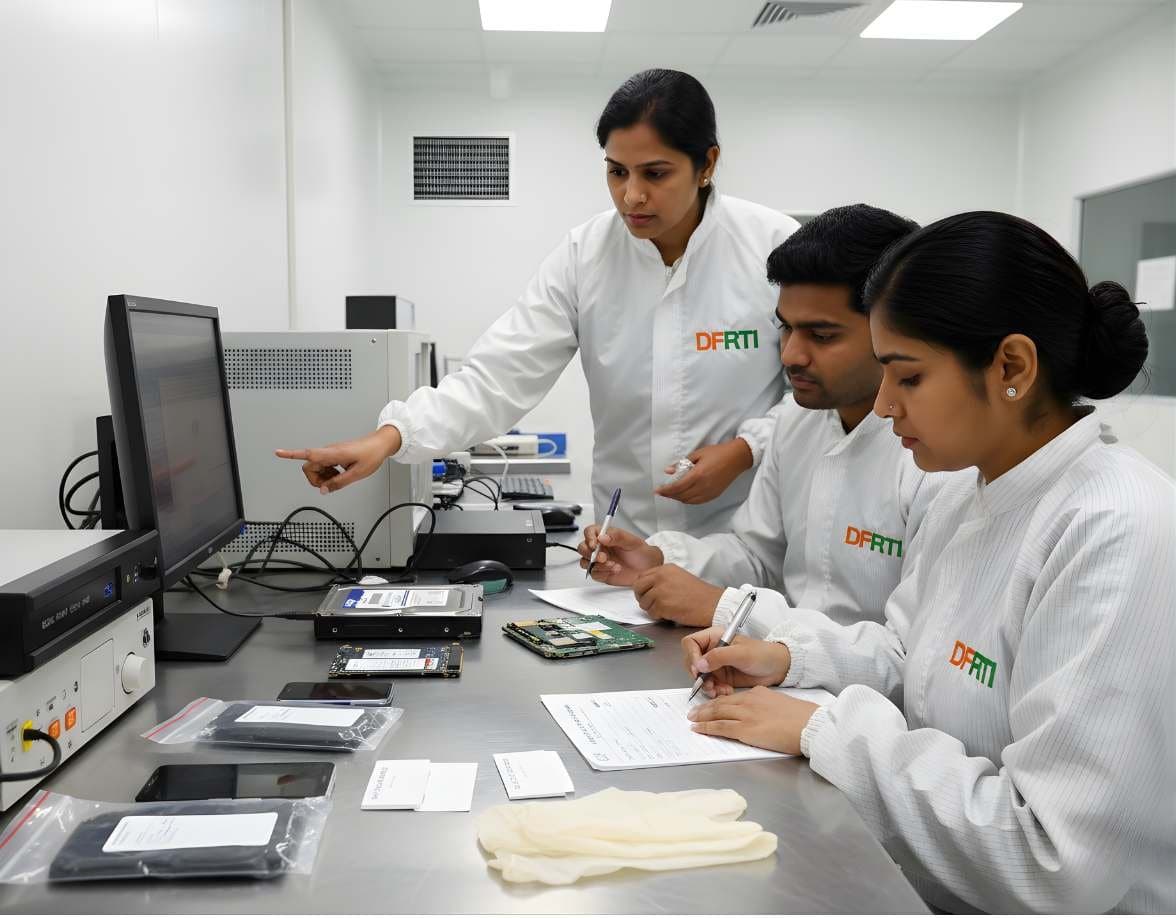
 StorageDigital Storage ForensicsSSD / NVMe ForensicsHow TRIM, garbage collection and wear levelling change evidence on SSD and NVMe drives.
NIST SP 800-88 Rev. 2 Guidelines for Media Sanitization
NIST SP 800-88 Rev. 2 is the reference most organisations name when they say a drive was securely erased. This page sets out what the final September 2025 text contains and how a forensic laboratory, which both erases media and examines erased media, should use it.
StandardNIST2025 (Revision 2)Final, September 2025; Rev. 1 withdrawnReviewed 2 November 2026
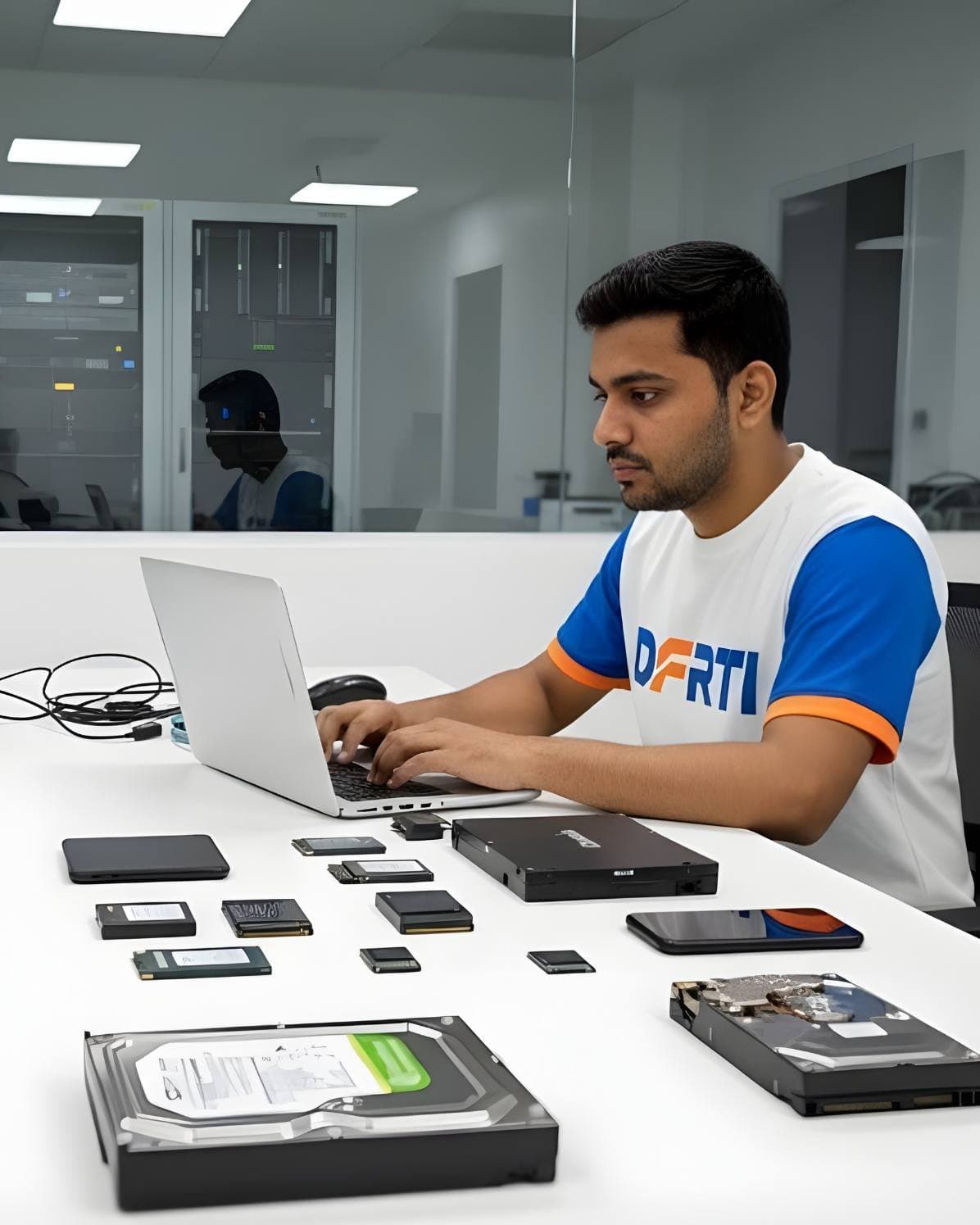
NIST SP 800-88 Revision 2, Guidelines for Media Sanitization, is published by the National Institute of Standards and Technology. Its authors are Ramaswamy Chandramouli of NIST and Eric A. Hibbard of Samsung Semiconductor. The NIST Editorial Review Board approved it on 12 September 2025, NIST's publication page records the Final release on 26 September 2025 and the page lists NIST SP 800-88 Rev. 1 of December 2014 as superseded and withdrawn. NIST added a set of frequently asked questions on 16 July 2026.
The abstract defines sanitization as a process that renders access to target data on the media infeasible for a given level of effort and says the guide helps organisations and system owners set up a media sanitization programme with techniques and controls matched to the sensitivity of their information. That sentence carries the whole shift of this revision: it is a document about running a programme, not a manual of erasure techniques. Our Insights article on what changed from Rev. 1 covers the differences; this page is the reference to the document as it stands.
For a forensic laboratory the guide matters twice over. The laboratory sanitises its own media, including working drives, target drives and evidence copies at the end of retention, and it is the party asked to say whether someone else's sanitization worked, or whether anything survives on a drive that was supposed to be clean.
Status and Edition
Revision 2 is current and final. The initial public draft was released on 21 July 2025 and the final text followed in September 2025; the FAQ of July 2026 clarifies the text without changing it. The document has an executive summary, four sections and four appendices and is free to download from NIST. It is a United States federal guideline, written under the Federal Information Security Modernization Act for federal agencies and usable by anyone else voluntarily; it has no legal force in India.
The Structure
Knowing where things are saves time, because readers who open the document looking for a table of techniques will not find one.
- Section 1, Introduction
Purpose, audience and assumptions, and how the guide relates to FIPS 199 and FIPS 200 for categorisation, FIPS 140-3 for cryptographic modules and NIST SP 800-53 for the sanitization control.
- Section 2, Background
Why disposition decisions start at system design, the two types of media, hard copy and information storage media, the target of sanitization and the factors that influence a decision, from cost and volume to who performs the work.
- Section 3, Summary of Sanitization Methods
Clear, purge and destroy, the difference between logical and physical techniques, and the only technique the guide treats in detail, cryptographic erase, with its strength, applicability, key sanitization, implementation quality and traceability requirements.
- Section 4, Media Sanitization Program
Policy, scope, the decision framework with its flow diagram, performing sanitization, sanitization assurance through verification and validation, documentation and ten example roles.
- Appendices A to D
A glossary, the device characteristics to request from vendors, a sample certificate of sanitization form and the change log against Rev. 1.
Key Terms
Definitions follow the guide's glossary in Appendix A, restated in plain words.
I
- Infeasible
- Not possible for a given level of effort with current state-of-the-art techniques. The guide admits future technology might change that, which is why validation considers how long the data stays sensitive.
- Information Storage Media (ISM)
- Devices that hold bits and bytes, from hard disks and SSDs to phones and office equipment, and systems that provide virtual or logical storage such as cloud and object stores.
S
- Sanitization Method and Technique
- A method is clear, purge or destroy. A technique is the technology-specific way of achieving it, such as overwrite, block erase, cryptographic erase, degauss or shred. The guide covers methods and leaves techniques to IEEE 2883 and similar standards.
- Statement of Volatility
- A vendor document listing every volatile and non-volatile memory component in a device, what each holds, whether users can reach it and how it can be sanitised. The guide recommends asking for one before purchase.
T
- Target Data
- The stored sensitive data to be protected. Section 2.3 says that if it cannot be selectively sanitised, the operation should cover all user data on the device.
V
- Validation
- The decision that the target data was effectively sanitised, considering the verification results against the sensitivity of the data, ending in acceptance or in repeating with a different technique or a stronger method.
- Verification
- Inspecting the outcome of a technique to see whether it completed successfully: completion status, errors, anomalies, device health, or for destruction the remnants and the equipment used.
Z
- Zeroization
- The key sanitization technique the guide requires for cryptographic erase, defined by ISO/IEC 19790, such as overwriting key storage with zeros, ones or random data.
How a Forensic Laboratory Applies It
The guide is written for an organisation's programme. These are the points at which a laboratory meets it, with the section that governs each.
- 01Write the Policy
Section 4.1 asks for a policy that maps the laboratory's own data classification to minimum methods, states requirements for reuse and disposal, names acceptable techniques, fixes documentation, assigns roles and training and covers tool calibration, testing and maintenance. Evidence copies, client data and student data each get a class.
- 02Know Every Medium You Hold
Section 4.3.1 reminds readers that a desktop holds a hard drive, RAM and ROM, and a phone holds internal and removable memory. A laboratory adds write-blocker caches, imaging appliances, loaned target drives and the drives inside printers and network gear.
- 03Decide Through the Flow
Section 4.3 drives the decision by the confidentiality of the information, not the media type: will the media be reused, will it leave the organisation, what is the categorisation. A target drive reused inside the laboratory for the next case may need only clear; an evidence copy leaving for a client needs purge or destroy.
- 04Perform to a Named Technique Standard
Section 4.4 says sanitization should comply with IEEE 2883 or a standard the organisation's policy names, using the option with the most confidentiality protection, and warns that a sanitised device is not in a factory-fresh state.
- 05Verify, Then Validate
Under section 4.5 the operator checks the tool's completion status and errors; a named person then decides whether the outcome is acceptable for the sensitivity of the data. The guide lists reasons an apparently successful operation can fail validation, including a degaussed SSD and an overwrite on an overprovisioned drive.
- 06Certify Each Device
Section 4.6 asks for a certificate per sanitised device with at least the manufacturer, model, serial number, property number, media type and source, method, technique, tool and version, verification method and the name, title, date, location, contact and signature of the people who verified and validated. The Appendix C form adds the disposition and a concurrence signature.
- 07Examine Sanitised Media Honestly
When a client asks whether a drive was really erased, the laboratory applies the same vocabulary: a clear-level overwrite on an SSD leaves spare cells unaddressed, a purge through the drive's own sanitize command depends on the vendor's implementation, and a hash of all-zero sectors proves the readable area only. Our SSD and TRIM explainer under Insights goes into what an image of such a drive contains.
What It Does Not Do and Common Misunderstandings
- It does not tell you how to sanitise a given device. Apart from cryptographic erase, the techniques are delegated to IEEE 2883, the NSA/CSS policy manuals or a standard the organisation approves.
- It is not a law anywhere. In India the duties to erase personal data come from the Digital Personal Data Protection Act, 2023 and its Rules of 2025; this guide is one defensible way to meet them, not the requirement itself.
- NIST does not certify products, services or laboratories to it. A claim of being NIST certified for sanitization has no basis in this document.
- It is not a certificate for a laboratory either. Accreditation is assessed against ISO/IEC 17025 by a body such as NABL, and a laboratory's sanitization procedure is one item within that assessment.
- It does not apply to national security systems, which follow the NSA/CSS policies it references.
- It assumes the organisation has already categorised its information. Without a classification scheme the decision flow has nothing to start from.
- It does not require sampling the drive after a clear or purge unless policy says so, which surprises people who expected a proof-of-erasure read. The assurance comes from verification and validation, not from reading back the whole device.
How It Fits With the Other Standards on This Site
The guide leans on two outside standards: IEEE 2883, the IEEE Standard for Sanitizing Storage, for techniques, and ISO/IEC 27040, the storage security standard, for the programme elements, the cryptographic erase pre-conditions and the idea of sanitization assurance. It also references NSA/CSS Policy Manual 9-12 for high-security media and the NSA evaluated products lists for degaussers and destruction equipment. A laboratory that buys IEEE 2883 and reads this guide has the complete picture.
On the forensic side, the SWGDE Best Practices for Data Destruction, Media Sterilization and Sanitization (24-F-001, version 1.0, published in July 2026) addresses the same subject from the examiner's bench, and ISO/IEC 27037:2012 governs what happens to evidence media before any of this applies. Our pages on the Digital Personal Data Protection Rules, 2025 cover the Indian erasure duties that make a documented sanitization programme worth having.
Common Questions
We bought a tool that says it follows NIST SP 800-88. Is that enough?
A tool can implement techniques that fit the clear or purge methods; it cannot run your programme. The policy, the decision, the validation and the certificate are yours, and the guide says so by putting them in section 4.
Does the guide still accept degaussing?
Only as a physical purge technique for legacy magnetic media, matched to the coercivity of the media, never for flash or hybrid devices, and not as a destroy method even when it leaves the drive inoperable.
Can a forensic laboratory issue a certificate of sanitization for a client's drives?
It can perform and certify sanitization as a service, using the Appendix C fields. It should state plainly that the certificate records the method, verification and validation, and is not a NIST certification, which does not exist.
Where is the India angle?
In the retention and erasure duties of the Digital Personal Data Protection Rules, 2025 and in the habit of Indian buyers and auditors of naming this guide. A per-device certificate under a written programme is far easier to defend than a vendor's one-line assurance.
Official sources
- NIST SP 800-88 Rev. 2 publication page (status, authors, supersedes, FAQ link)NIST Computer Security Resource Center
- Full text PDF of NIST SP 800-88 Rev. 2 (September 2025)NIST
- Frequently Asked Questions for NIST SP 800-88r2 (16 July 2026)NIST
- NIST SP 800-88 Rev. 1 publication page (withdrawn December 2014 revision)NIST Computer Security Resource Center
This page is educational material, not legal advice. Laws and standards change, commence on different dates and are interpreted differently across jurisdictions. Always read the official text linked on this page and take advice from a qualified professional for a real matter.
Disciplines where this applies
Courses that teach it
StorageDigital Storage ForensicsSSD / NVMe ForensicsHow TRIM, garbage collection and wear levelling change evidence on SSD and NVMe drives. StorageDigital Storage ForensicsHDD ForensicsImage hard drives through a write-blocker, find hidden areas and recover deleted data.
 LegalFoundation & Legal CoursesLegal & Court ProceduresIndian law on electronic evidence: BSA Section 63, BNSS search and seizure and the IT Act.
Go deeper with DFRTI
Free pages explain the ground. Structured courses, lab work and a mentor take you from knowing about it to doing it on a case.