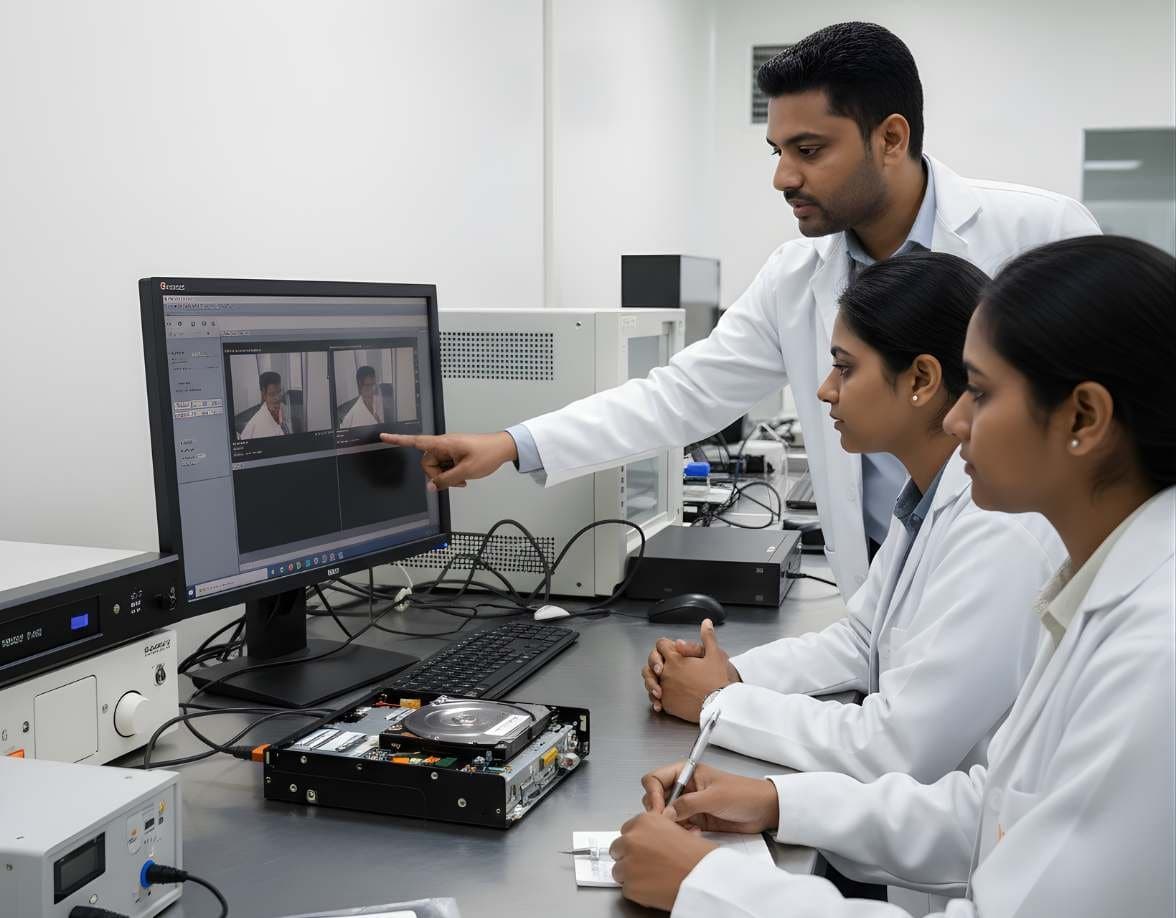
 VideoSurveillance & Image / Video ForensicsCCTV / DVR AnalysisExport footage from Hikvision, Dahua and other DVRs with correct times, frames and hashes
Amped Software
Amped FIVE
Amped FIVE is a workstation for CCTV and image evidence. It opens proprietary DVR files, applies documented filters to make what is there easier to see and writes a report of every step. Clarifying a picture is a different job from proving it is genuine.
SoftwareCommercialCurrentWindows
Profile
- Manufacturer
- Amped Software
- Category
- Multimedia and video
- Product type
- Software
- Platforms
- Windows
- Licensing
- Commercial
- Product status
- Current
- Educational level
- Intermediate
- Last verified
- 2 November 2026
Sold as licences and seats. The product page states Windows 10 and 11 and warns that 32-bit support will end in a future release. Amped runs its own certification programme for the product, with which DFRTI has no connection.
What Amped FIVE is
FIVE stands for Forensic Image and Video Enhancement. The product page states Windows 10 and 11 in 32 or 64-bit, with a warning that 32-bit support will end. No extra plug-ins or special hardware are needed. A case starts with loading a video, an image or an image sequence. Proprietary CCTV and DVR exports are decoded by the software's own engine and the maker accepts requests to add formats that do not yet play. The examiner then reads the file: Exif data, container and codec details and encoding information frame by frame. Filters are added as a chain. The maker lists stabilisation, deblurring, noise and lighting correction, super-resolution built from several frames, perspective and lens distortion correction, deinterlacing and aspect ratio correction among many others. Measurement tools estimate heights and speeds from footage, with a three-dimensional mode that uses a scene model. Redaction of faces and audio, annotation and side-by-side display of original and processed frames serve presentation.
The report is the part that matters most in court. FIVE records every filter, its settings and the scientific reference behind it, so another examiner can repeat the chain on the original and reach the same output. That is where enhancement stops and the examiner's work begins. Enhancement changes pixel values to help a viewer. Whether the clarified plate reads one character or another is interpretation, and the examiner says so. Whether the file was altered before it reached the laboratory is authentication, which belongs to Amped Authenticate or a similar tool. Validation means testing each filter on known material before relying on it. A good laboratory keeps the original export untouched, works on a hashed copy, saves the project file and never lets a filter add detail the camera did not record.
Primary applications
Where it is used
- Converting proprietary DVR exports into a form that plays and can be examined
- Clarifying plates, faces or clothing under recorded settings
- Frame-accurate timing, height and speed estimates with stated uncertainty
- Redacting faces and audio for disclosure
- Preparing annotated presentations for court
- Producing a processing report that another examiner can repeat
Who uses it
- Video forensic analysts
- Police CCTV and imaging units
- Forensic laboratories
- Independent examiners preparing court evidence
Capabilities and limits
Major capabilities
- Decoding of many proprietary CCTV and DVR formats
- Inspection of Exif, container, codec and frame-level encoding data
- Filter chain for stabilisation, deblurring, noise, lighting, super-resolution, distortion and deinterlacing
- Measurement of heights and speeds, including a three-dimensional scene mode
- Audio and video redaction and annotation tools
- Side-by-side comparison of original and processed frames
- Automatic report listing every step, setting and scientific reference
- Runs on a standard Windows computer without extra hardware
Technical limitations
- No filter can restore detail that the camera never recorded
- Heavily compressed footage sets a floor below which clarification becomes speculation
- Measurements need calibration and scene references and carry uncertainty that must be stated
- Proprietary format support depends on the maker's decoder keeping up with DVR vendors
- Windows only
- The report records what was done. The examiner must still explain why each step was appropriate
Learning with DFRTI
Independent professional education covering the principles and workflows of Amped FIVE. DFRTI is not a vendor training centre and its courses are not vendor certifications.
Before you learn it
- Digital video basics: containers, codecs, interlacing and frame rates
- Image processing fundamentals
- Evidence handling of DVR exports and report writing
Disciplines
Related tools
- Amped AuthenticateAmped Authenticate asks a different question from FIVE. Not what does this picture show, but can this file be trusted. It tests integrity, reconstructs processing history, links an image to a camera and searches for manipulated or generated content.Amped Software
- FFmpegFFmpeg is the engine behind most media software. For an examiner its three commands inspect a file's streams, extract frames without guessing and convert footage for viewing with every setting on record.FFmpeg project
- MediaInfoMediaInfo reads a media file's structure and reports it: container, video and audio codecs, bit rates, frame rate, duration, encoding settings and tags. It tells an examiner what a file is before any player opens it.MediaArea
- ExifToolExifTool reads the metadata inside a file and prints it in full: camera, lens, timestamps, GPS, editing software, maker notes and embedded thumbnails. It is the first stop when a photo or video has to explain where it came from.Phil Harvey
- ImageMagickImageMagick converts, inspects and processes images from the command line or from code. In a forensic laboratory it is the scripting layer for image work: batch conversion, pixel comparison, property listing and repeatable processing with every parameter on record.ImageMagick Studio LLC
- ForensicallyForensically is a free web page of image analysis tools that run inside the browser, so the picture never leaves the examiner's computer. It is a teaching and first-look tool, and its author says plainly that it cannot tell true from false.Jonas Wagner
Courses that cover this tool
VideoSurveillance & Image / Video ForensicsCCTV / DVR AnalysisExport footage from Hikvision, Dahua and other DVRs with correct times, frames and hashesVideoSurveillance & Image / Video ForensicsImage & Video MetadataRead EXIF, XMP, GPS tags and MP4 atoms with ExifTool and know what each field can prove LegalFoundation & Legal CoursesForensic Report WritingWrite clear forensic reports that answer the questions asked and survive cross-examination.
Official source
Product names and trademarks belong to their respective owners. DFRTI is an independent educational and research institute. Inclusion in this directory does not imply manufacturer endorsement, partnership or authorisation. Facts are checked against the manufacturer's public documentation on the date shown and may have changed since.
Go deeper with DFRTI
Free pages explain the ground. Structured courses, lab work and a mentor take you from knowing about it to doing it on a case.