 LegalFoundation & Legal CoursesBasics of Cyber ForensicsStart here. Evidence handling, imaging, hashing, chain of custody and your first analysis.
NIST SP 800-86 Guide to Integrating Forensic Techniques into Incident Response
NIST SP 800-86 is the guide that gave incident responders a forensic process they could write into policy. Twenty years on, its four phases still shape how laboratories describe their work.
StandardNIST2006Final (not withdrawn)Reviewed 2 November 2026
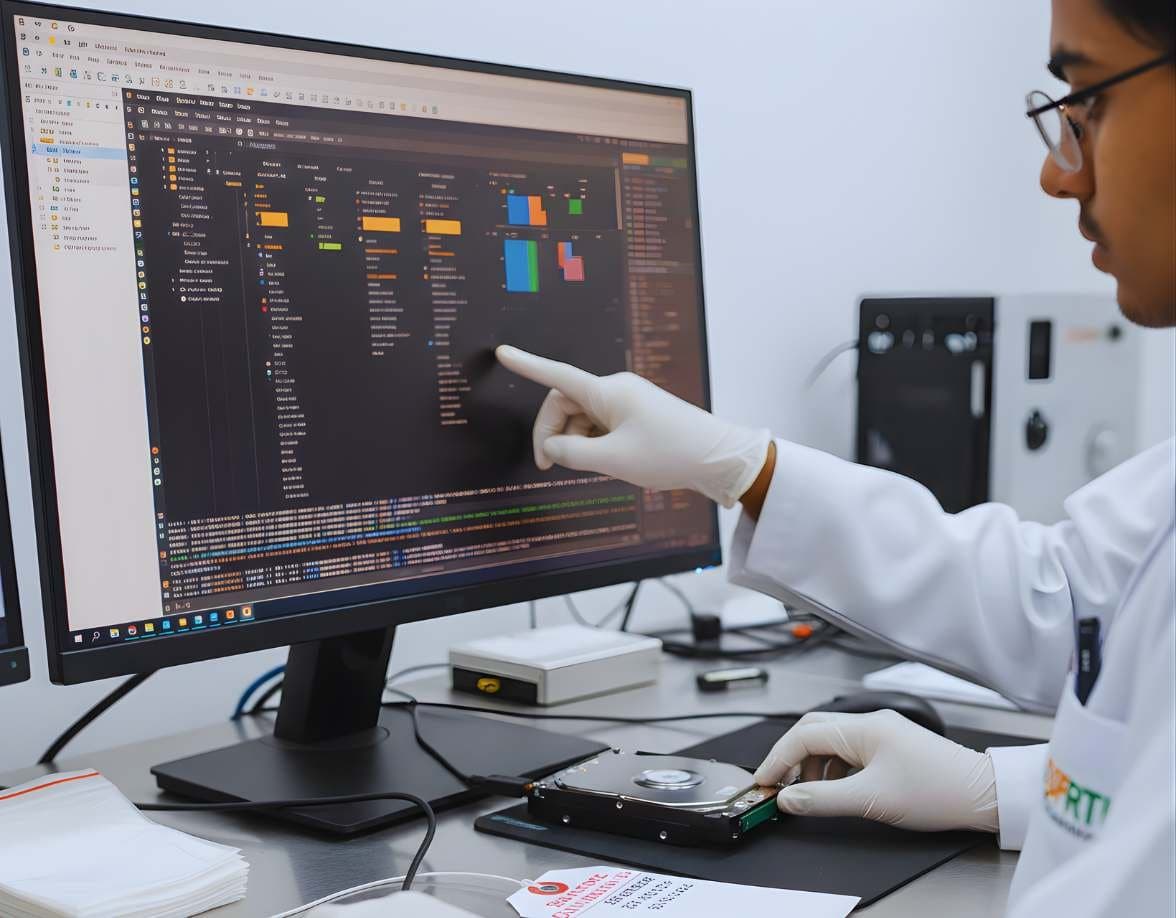
NIST SP 800-86, Guide to Integrating Forensic Techniques into Incident Response, was published by the National Institute of Standards and Technology in August 2006. Its authors are Karen Kent and Tim Grance of NIST and Suzanne Chevalier and Hung Dang of Booz Allen Hamilton. NIST's publication page lists it as Final with no withdrawal or supersession notice, and the document runs to 121 pages.
The purpose, in the guide's own words, is to help organisations investigate computer security incidents and troubleshoot some IT operational problems by giving practical guidance on computer and network forensics, from an IT point of view rather than a law enforcement one. It describes the forensic process and then, chapter by chapter, how to collect, examine and analyse four kinds of data: files, operating systems, network traffic and applications.
Its audience is incident response teams, forensic analysts, system and network administrators and security programme managers. That breadth is why it reads less like a laboratory manual and more like a guide to building a forensic capability inside an organisation, with policies, staffing and procedures given as much space as technique.
Status and Edition
There is one edition. NIST's document history shows the Final version dated 1 September 2006 and nothing after it. The guide has not been revised, withdrawn or formally superseded, but parts of its subject have moved to newer documents: incident handling to NIST SP 800-61, whose Revision 3 of April 2025 aligns it with the NIST Cybersecurity Framework 2.0, and mobile devices to NIST SP 800-101 Rev. 1 of 2014. Read it as a current statement of process and a dated statement of technology.
The guide says of itself that it is not an all-inclusive step-by-step guide to a digital forensic investigation, not legal advice and not a basis for criminal investigations, and that readers should apply it only after consulting management and legal counsel. For law enforcement it points to the US Department of Justice first responder and examination guides.
The Four-Phase Forensic Process
Chapter 3 sets out the process in four phases and notes that other models with more or fewer phases reflect the same principles. The guide describes the whole as transforming media into data, data into information and information into evidence.
- 01Collection
Identifying, labelling, recording and acquiring data from the possible sources while preserving its integrity. Acquisition itself is a three-step process: plan, acquire, verify integrity.
- 02Examination
Processing the collected data with automated and manual methods to find and extract the data of interest, still preserving integrity.
- 03Analysis
Studying the results of the examination with legally justifiable methods to answer the questions that started the work.
- 04Reporting
Describing what was done and found, how tools and procedures were chosen, what further action is needed and how policies, procedures and tools could be improved.
Key Terms and Ideas
C
- Centralised Logging
- One of the proactive readiness measures the guide recommends, so that logs survive an attacker's attempt to alter them and are available when an incident is investigated.
- Chain of Custody Decision
- Before collecting anything, the analyst or management decides, with legal advisers, whether the evidence may be needed in legal or disciplinary proceedings. If so, a chain of custody is kept from the first action.
D
- Data Concealment Tools
- The guide's term for software used to hide, encrypt or wipe data, listed among the application types an analyst should recognise.
L
- Likely Value, Volatility, Effort
- The three factors the guide uses to prioritise sources. Volatile data on a live system is usually collected first; a source that needs a court order to reach is weighed against what it is likely to add.
T
- Three-Step Acquisition
- Develop a plan that prioritises sources, acquire the data, verify its integrity by computing message digests of the original and the copy and comparing them.
V
- Volatile and Non-Volatile Data
- Data lost on power-off or with time, such as memory contents and network connections, against data on disk. Chapter 5 gives the order in which volatile operating system data should be collected.
What Each Data Source Chapter Covers
Chapters 4 to 7 follow the same pattern for each source: basics, collection, examination and analysis, recommendations. Chapter 8 shows two scenarios, a suspected worm infection and a threatening email, that use several sources together.
- Data files: storage media, file systems, deleted data and slack space, copying files from media, file integrity, modification, access and creation times, locating and extracting data with a forensic toolkit.
- Operating systems: non-volatile data such as configuration and logs, volatile data such as memory, network connections and running processes, and the technical issues of collecting both.
- Network traffic: the TCP/IP layers, data sources from firewalls and routers to packet sniffers, intrusion detection systems and security event management software, legal considerations before capturing traffic, and a method for examining it from identifying an event to attempting attacker identification.
- Applications: configuration settings, authentication, logs, data and supporting files, with sections on email, web usage, interactive communications, file sharing, document usage, security applications and data concealment tools.
How a Laboratory or Response Team Applies It
A generic example: a company's web server has been defaced and the internal team wants evidence that will stand up if the matter goes to the police.
- 01Settle Policy First
The team checks that company policy allows it to monitor and examine the server and who must be told. The guide puts this before any technical step and asks that forensic roles be written into policy in advance.
- 02Decide on Chain of Custody
Because police involvement is possible, management decides to collect as for legal proceedings. From this point every exhibit is labelled and every handover recorded.
- 03Plan the Collection
Sources are listed and ranked: server memory and network connections first because they are volatile, then the disk, then firewall and proxy logs, then the hosting provider's records, which may need a formal request.
- 04Acquire and Verify
Memory is captured with a tested tool, the disk is imaged through a write blocker and a SHA-256 digest of source and image is recorded. Logs are copied with their own digests.
- 05Examine and Analyse Across Sources
Web server logs, file timestamps and firewall records are placed on one timeline, the way chapter 8 does for its worm scenario, to find the entry point and the sequence of events.
- 06Report With Recommendations
The report records the findings and, as the guide asks, what should change: patching, logging gaps and the procedure the team would follow next time.
What It Does Not Do and Common Misunderstandings
- It is a 2006 document. It predates cloud services, smartphones as we know them, solid-state drives and modern full-disk encryption, and it mentions PDAs and Firewire. Use it for process, not for technology.
- It is a United States federal guideline written for federal agencies, usable by others voluntarily. It has no legal force in India.
- It is not a law enforcement guide and says so; Indian police procedures come from Indian law and departmental orders, not from this document.
- It is not a certificate and no laboratory can be certified to it. Accreditation is assessed against ISO/IEC 17025 by a body such as NABL.
- Final on NIST's page does not mean current in every detail. Pair it with NIST SP 800-61 Rev. 3 for incident response and NIST SP 800-101 Rev. 1 for mobile devices.
- Its network traffic chapter asks for legal review before capturing traffic, a point that applies with extra force in India, where interception and monitoring are regulated.
How It Fits With the Other Standards on This Site
The four phases of NIST SP 800-86 sit comfortably inside the acquisitive and investigative process classes of ISO/IEC 27043:2015, and its collection chapter is the incident-response cousin of ISO/IEC 27037:2012. Where the ISO/IEC standards are abstract and paid, this guide is concrete and free, which is why many Indian laboratories quote it in procedures even when their quality system is written to the ISO/IEC family.
For practitioners, the SWGDE Best Practices for Digital Evidence Collection (18-F-002, version 2.0) and the SWGDE Best Practices for Computer Forensic Acquisitions (17-F-002, version 2.1) carry the same ideas with current technology. Our hash verification tutorial under Insights takes the integrity verification step of this guide and shows how to record it.
Common Questions
Why do people still cite a 2006 guide?
Because its process model and its advice on policy, prioritisation and integrity have not dated, and because it is free and well written. The technology chapters are the part to supplement.
Is there a newer NIST forensic process document?
Not a direct replacement. NIST SP 800-61 Rev. 3 covers incident response, NIST SP 800-101 Rev. 1 covers mobile devices and NIST SP 800-88 Rev. 2 covers sanitization. The general forensic process remains in this guide.
Can a private Indian company use it as its forensic policy?
It can use it as the basis for one, which is what the guide intends. The policy itself must be written for Indian law, especially on monitoring staff and capturing network traffic.
Official sources
This page is educational material, not legal advice. Laws and standards change, commence on different dates and are interpreted differently across jurisdictions. Always read the official text linked on this page and take advice from a qualified professional for a real matter.
Disciplines where this applies
Courses that teach it
LegalFoundation & Legal CoursesBasics of Cyber ForensicsStart here. Evidence handling, imaging, hashing, chain of custody and your first analysis. MalwareIncident Response & Malware AnalysisMemory ForensicsCapture RAM and use Volatility 3 to find hidden processes, injected code and connections.
 NetworkNetwork & Cloud ForensicsNetwork Traffic AnalysisRead flows, logs and packets to trace intrusions, beaconing and data theft.
Go deeper with DFRTI
Free pages explain the ground. Structured courses, lab work and a mentor take you from knowing about it to doing it on a case.