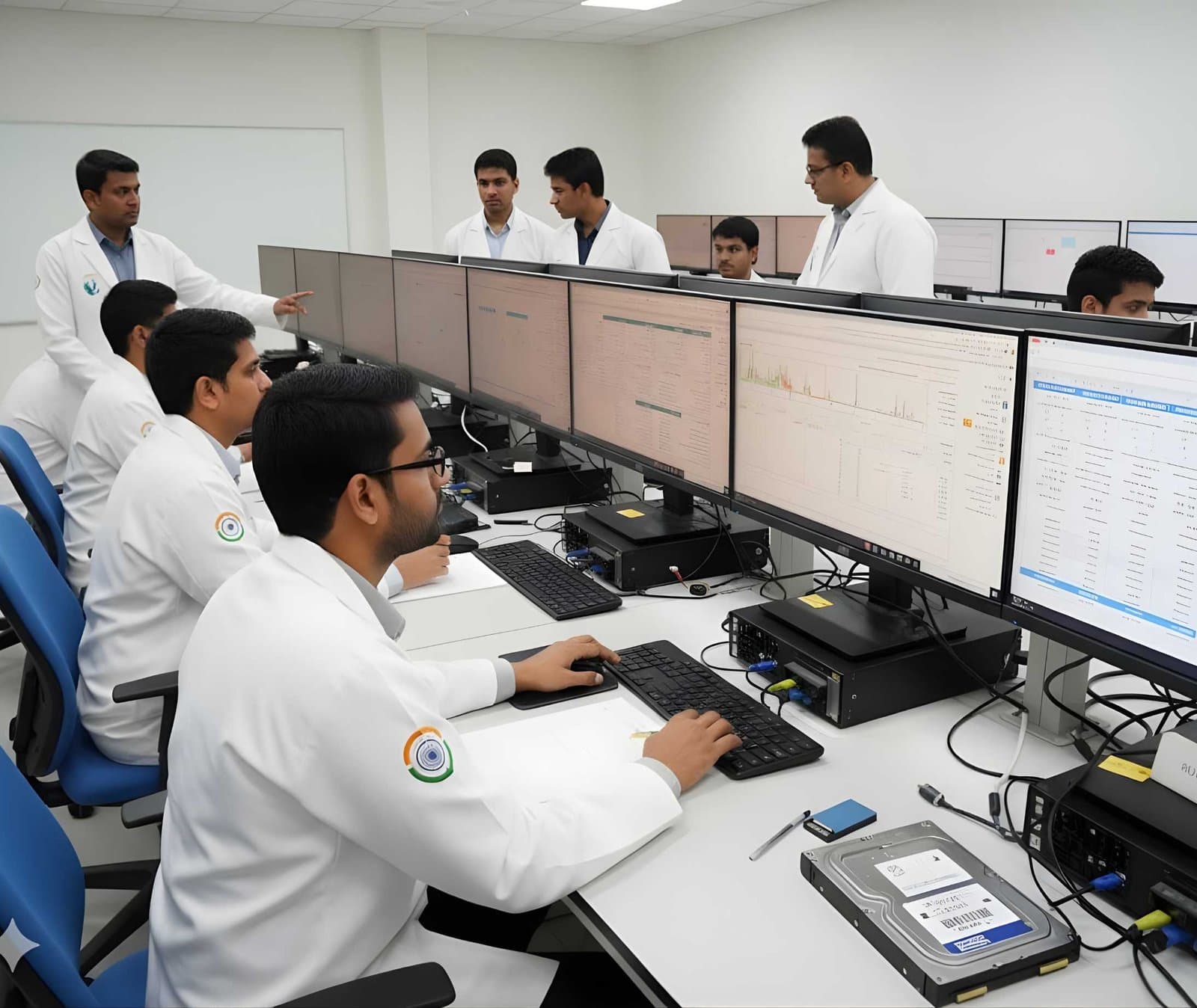
 LegalFoundation & Legal CoursesForensic Report WritingWrite clear forensic reports that answer the questions asked and survive cross-examination.
ISO/IEC 27042:2015 Guidelines for the Analysis and Interpretation of Digital Evidence
ISO/IEC 27042:2015 picks up where ISO/IEC 27037:2012 stops. It covers what an examiner does with a preserved copy, how to keep analysis separate from opinion and what a report must let a reviewer check.
StandardISO/IEC2015 (first edition)Current edition, confirmed 2021; systematic review closed September 2026Reviewed 2 November 2026
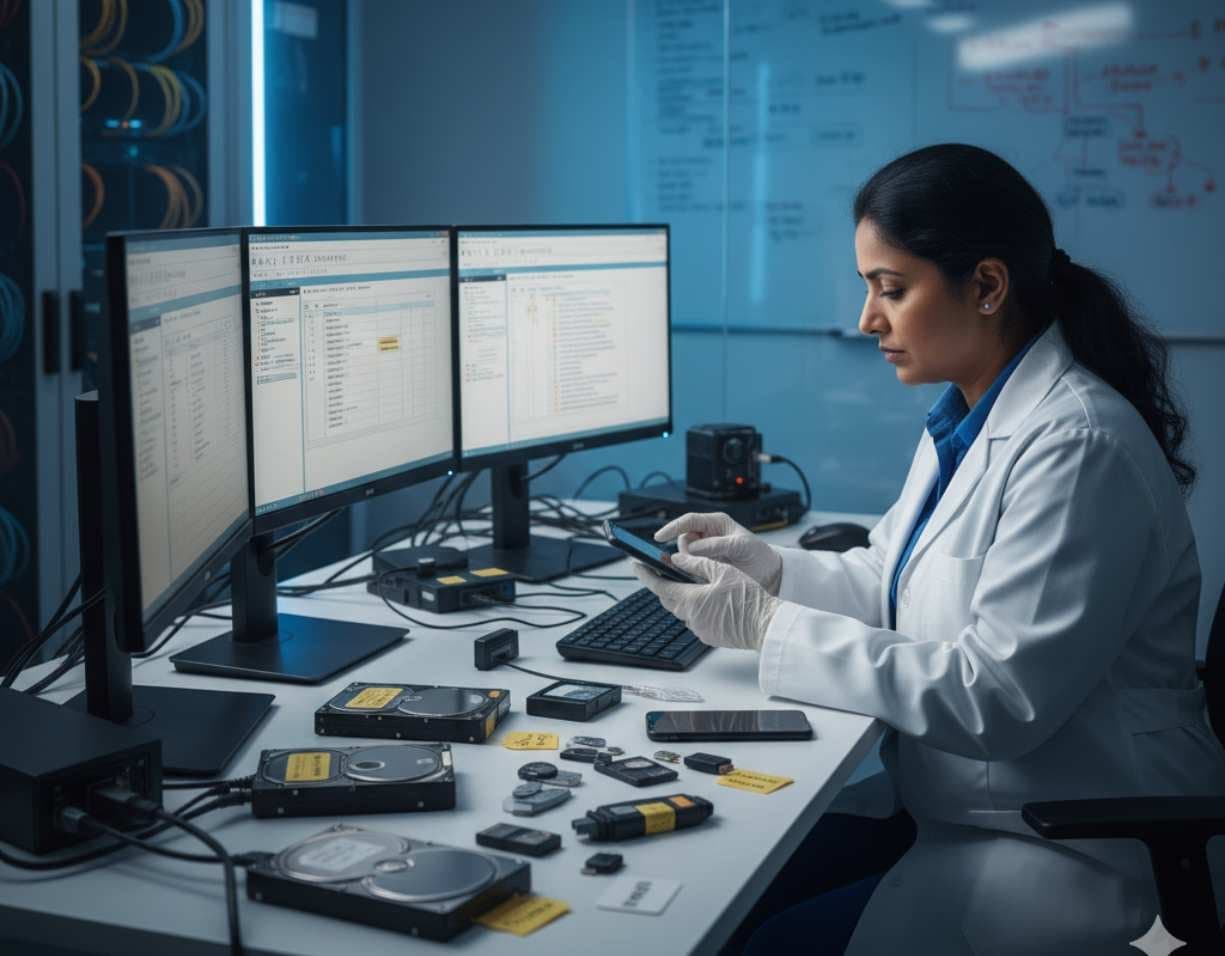
ISO/IEC 27042:2015, Information technology, Security techniques, Guidelines for the analysis and interpretation of digital evidence, is a short standard of 14 pages from ISO/IEC JTC 1/SC 27. Its abstract says it provides guidance on the analysis and interpretation of digital evidence in a way that addresses continuity, validity, reproducibility and repeatability, that it describes good practice for selecting, designing and implementing analytical processes and for recording enough information to allow independent scrutiny, and that it covers ways of showing that an investigative team is proficient and competent.
Two further points in the abstract matter for how the standard is used. It recognises that an examiner may have to justify a chosen method or devise a new one and show it to be fit for purpose, which links it to ISO/IEC 27041:2015. And it says it provides a common framework for the analytical and interpretive parts of incident handling along with a minimum common standard for the digital evidence produced, which is the sentence that makes it useful between laboratories and across borders.
Status and Edition
Published on 19 June 2015 as a first edition, reviewed in 2020 and 2021 and confirmed on 19 April 2021. The ISO catalogue says the 2015 version remains current. A new systematic review opened on 15 April 2026 and closed on 3 September 2026, and as of 2 November 2026 the catalogue shows no result. The text is paid; this page works from the abstract, the catalogue, the preview and reputable summaries, and names clauses only as they appear in the published table of contents.
The Structure in Outline
The body runs from clause 5 to clause 11, each a stage or a property of good analytical work.
- Clause 5, Investigation
Where analysis sits in the wider investigation and what the examiner must receive from the collection stage, including continuity of the evidence.
- Clause 6, Analysis
Finding out what the data is: which files, records, timestamps and artefacts exist on the preserved copy, using processes that can be repeated and reproduced.
- Clause 7, Analytical Models
Ways of structuring the analysis, including the difference between working on a preserved static copy and working on a live, running system that cannot be imaged.
- Clause 8, Interpretation
Deciding what the findings mean in the context of the questions asked, with the reasoning and its limits stated. This is where fact ends and opinion starts, and the standard keeps the two apart.
- Clause 9, Reporting
What a report must contain so that another competent person can follow the work and reach their own view.
- Clauses 10 and 11, Competence and Proficiency
The people side: how a laboratory shows that its examiners know what they are doing and keep demonstrating it. Annex A gives examples of competence and proficiency specifications.
Key Terms
The four properties in the abstract are the ones to learn first; the others follow.
A
- Analysis
- Establishing what the data contains. It should be objective, and two competent examiners should produce essentially the same analysis.
C
- Competence
- Demonstrated knowledge and skill to perform a defined task, usually shown by training records, supervised casework and assessment.
- Continuity
- The unbroken, documented custody of the evidence from collection through analysis, so that the copy analysed is provably the copy acquired.
I
- Interpretation
- Explaining what the analysis means for the matter under investigation. It involves judgement and must therefore state its basis and its limits.
P
- Proficiency
- Continued demonstration of competence, typically through proficiency tests in which a known sample is examined and the result compared with the expected answer.
R
- Repeatability
- The same examiner, using the same method and tools on the same evidence, gets the same result.
- Reproducibility
- A different examiner, possibly with different tools, gets the same result or can explain any difference by the choices made.
V
- Validity
- The method used is appropriate to the question and has been shown to work, which is the subject of ISO/IEC 27041:2015.
How a Laboratory Applies It
A generic example: an examiner receives a verified image of a 2 TB external drive with the question of whether a set of design files was copied to it on a given day.
- 01Receive With Continuity
The examiner checks the image hash against the acquisition record, confirms the chain of custody is unbroken and records the start of analysis. Any gap is reported before work begins, not after.
- 02Frame the Questions
The client's question is translated into things the data can answer: do the files exist, when were they created on this volume, what do the file system and link records say about how they got there.
- 03Choose the Analytical Model
A static analysis of the image is possible here, so no live work is needed. The examiner writes down the method and tools, each of which has been validated under the laboratory's ISO/IEC 27041:2015 process.
- 04Analyse and Record
File listing, timestamps, journal entries and USB artefacts are extracted and recorded with tool versions and settings, so that a second examiner could repeat the steps exactly.
- 05Interpret Separately
In a separate section the examiner states what the findings support, what they do not, and the alternative explanations considered, such as a clock that was wrong or a copy made by a backup programme rather than a person.
- 06Report for Scrutiny
The report gives the method, the results, the interpretation and its limits, in that order, so that a reviewer or an opposing expert can check each part on its own.
- 07Keep the People Records
The examiner's competence record for this type of work and the laboratory's proficiency test results are on file, ready for an assessor or a court.
What It Does Not Do and Common Misunderstandings
- It is not a tool manual and names no software. Which parser you use is your decision, provided its use is valid and recorded.
- A reproducible result is not automatically a true one. Two examiners using the same flawed tool will reproduce the same mistake, which is why validation under ISO/IEC 27041:2015 comes first.
- It does not tell you what a finding means legally. Interpretation under this standard is technical; legal meaning is for counsel and the court under the Bharatiya Sakshya Adhiniyam, 2023.
- It is a guideline, not a law, and it cannot be certified to. Accreditation of a laboratory is assessed against ISO/IEC 17025 by a body such as NABL in India.
- Our own certifications show what a learner has studied with us. They are not evidence of compliance with this or any other standard.
- It covers the analysis stage only. Collection and preservation are in ISO/IEC 27037:2012 and the full investigation model is in ISO/IEC 27043:2015.
How It Fits With the Other Standards on This Site
Within the ISO/IEC family the sequence is simple: ISO/IEC 27037:2012 gets the evidence in, ISO/IEC 27042:2015 examines it, ISO/IEC 27041:2015 assures the methods used in both and ISO/IEC 27043:2015 places all of this within an investigation that starts before the incident and ends with closure. The standard's own abstract makes the link to ISO/IEC 27041:2015 explicit.
In day-to-day laboratory practice the SWGDE Best Practices for Computer Forensic Examinations (18-F-001, version 2.0), the SWGDE Requirements for Report Writing in Digital and Multimedia Forensics (18-Q-002) and the SWGDE Best Practices for Personnel Presenting Digital Evidence in Legal Proceedings (23-Q-001, version 1.1) cover the same ground with more detail, and ASTM E2916 supplies the standard terminology for digital and multimedia evidence examination. Our forensic report writing course is built around the separation of analysis from interpretation that this standard insists on.
Common Questions
Why does the standard separate analysis from interpretation so firmly?
Because they carry different weight. Analysis is a record of what is there and should be beyond dispute. Interpretation is an opinion about what it means, and a court is entitled to know where the opinion starts and what it rests on.
Does it apply to mobile and cloud evidence?
The principles apply to any digital evidence. The standard is written in general terms and does not describe device-specific methods.
Can one examiner's report be checked by another without the original tools?
That is the aim of the reproducibility and reporting clauses. If the report records the method, versions and settings and the laboratory keeps the working copy, a second examiner can repeat or reproduce the work.
Official sources
This page is educational material, not legal advice. Laws and standards change, commence on different dates and are interpreted differently across jurisdictions. Always read the official text linked on this page and take advice from a qualified professional for a real matter.
Disciplines where this applies
Courses that teach it
LegalFoundation & Legal CoursesForensic Report WritingWrite clear forensic reports that answer the questions asked and survive cross-examination.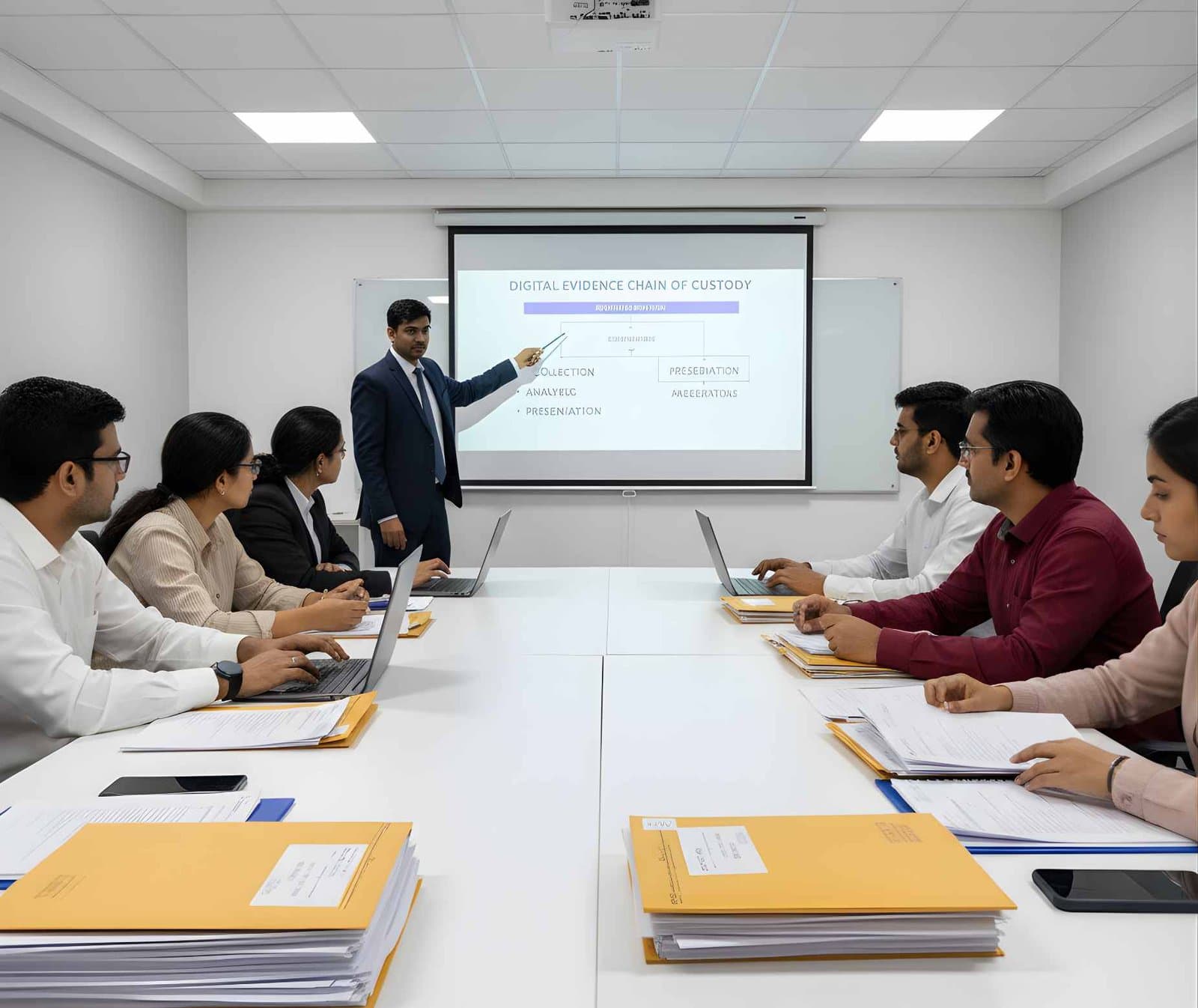 LegalFoundation & Legal CoursesLegal & Court ProceduresIndian law on electronic evidence: BSA Section 63, BNSS search and seizure and the IT Act.
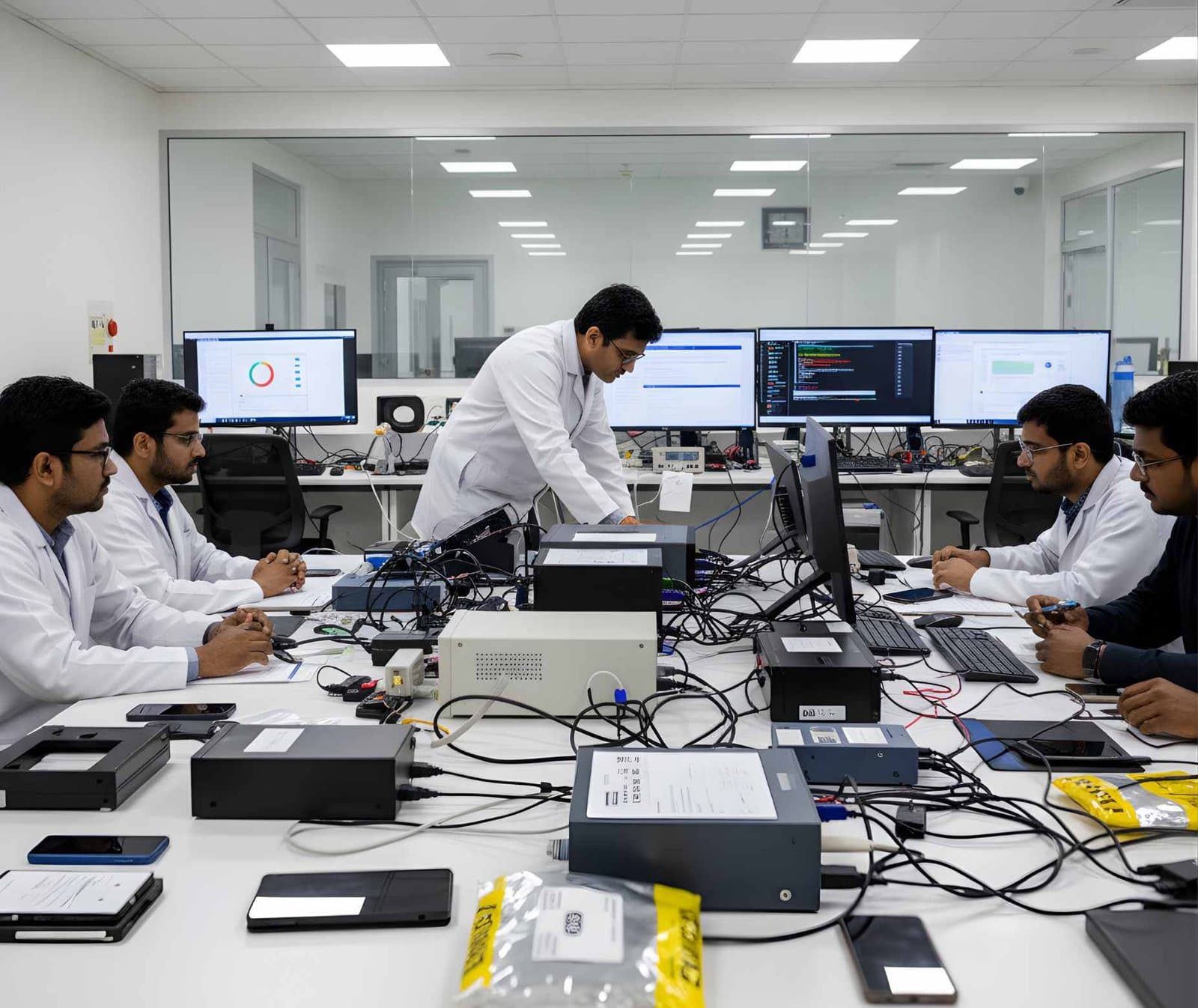 LegalFoundation & Legal CoursesBasics of Cyber ForensicsStart here. Evidence handling, imaging, hashing, chain of custody and your first analysis.
Go deeper with DFRTI
Free pages explain the ground. Structured courses, lab work and a mentor take you from knowing about it to doing it on a case.