Explore the DFRTI Digital Forensics Glossary

Welcome to the DFRTI Digital Forensics Glossary, your authoritative resource for understanding the terminology and concepts used in modern digital forensic investigations. This comprehensive glossary is designed for students, investigators, researchers and professionals who want to master the language of digital forensics.

Each term is clearly defined, with examples and context where applicable, so you can confidently navigate the complex landscape of data recovery, storage analysis, malware investigation and incident response.

digital forensics glossary terminology definitions
img
A

Acquisition

The process of collecting digital evidence from storage devices, memory or networks in a forensically sound manner. Acquisition ensures data integrity and prevents tampering.

Access Control

The process of collecting digital evidence from storage devices, memory or networks in a forensically sound manner. Acquisition ensures data integrity and prevents tampering.

Artifact

A piece of digital evidence left by user or system activity, such as logs, temporary files or cached data. Artifacts help reconstruct user behavior and system events.

img
B

Bitstream Imaging

A method of creating an exact, forensic copy of storage media, including all files, slack space and unallocated sectors. Essential for evidence preservation.

Blockchain Forensics

The analysis of transactions on decentralized ledgers to trace cryptocurrency movements, identify patterns and detect fraud or illicit activity.

img
C

Chain of Custody

A documented process showing the handling and transfer of digital evidence from acquisition to courtroom presentation. Vital for legal admissibility.

Cloud Forensics

The discipline of collecting and analyzing digital evidence from cloud platforms and virtual environments while maintaining data integrity and compliance.

Cryptographic Hash

A unique digital fingerprint of data (e.g., MD5, SHA-256) used to verify integrity during acquisition and examination.

img
D

Data Carving

A method of recovering files from unallocated or deleted space on storage media without relying on file system metadata.

Disk Forensics

Analysis of hard drives, SSDs, RAID systems or NAS storage to recover evidence, investigate tampering or perform file system analysis.

E

Encryption Analysis

The process of examining encrypted files or communication for forensic purposes, often requiring decryption keys or cryptographic attacks.

Evidence Preservation

Procedures to ensure that digital evidence remains unaltered during acquisition, transport, storage and analysis.

encryption analysis examine encrypted
F

File System Forensics

The study of file system structures (NTFS, FAT32, EXT4, APFS) to recover data, timestamps, metadata and deleted files.

Forensic Imaging

Creating exact duplicates of storage devices using write-blockers and hashing to maintain evidentiary integrity.

file system forensics
G

GPS Forensics

The extraction and analysis of location data from devices such as smartphones, vehicles or IoT devices to establish timelines and movements.

GUI Analysis

Investigation of digital evidence through graphical user interface interactions, often used in malware or user activity reconstruction.

gps forensics extract and analyze
H

Hash Verification

Comparing cryptographic hash values before and after acquisition to ensure data integrity and detect tampering.

HDD/SSD Forensics

Specific methods for analyzing traditional hard drives (HDD) or solid-state drives (SSD), including wear-leveling, TRIM and file recovery.

I

Incident Response (IR)

The process of detecting, analyzing and responding to cybersecurity incidents. Forensics is integral to IR, providing evidence and root cause analysis.

IoT Forensics

The investigation of data generated by connected devices, including smart home systems, drones, medical devices and industrial sensors.

img
M

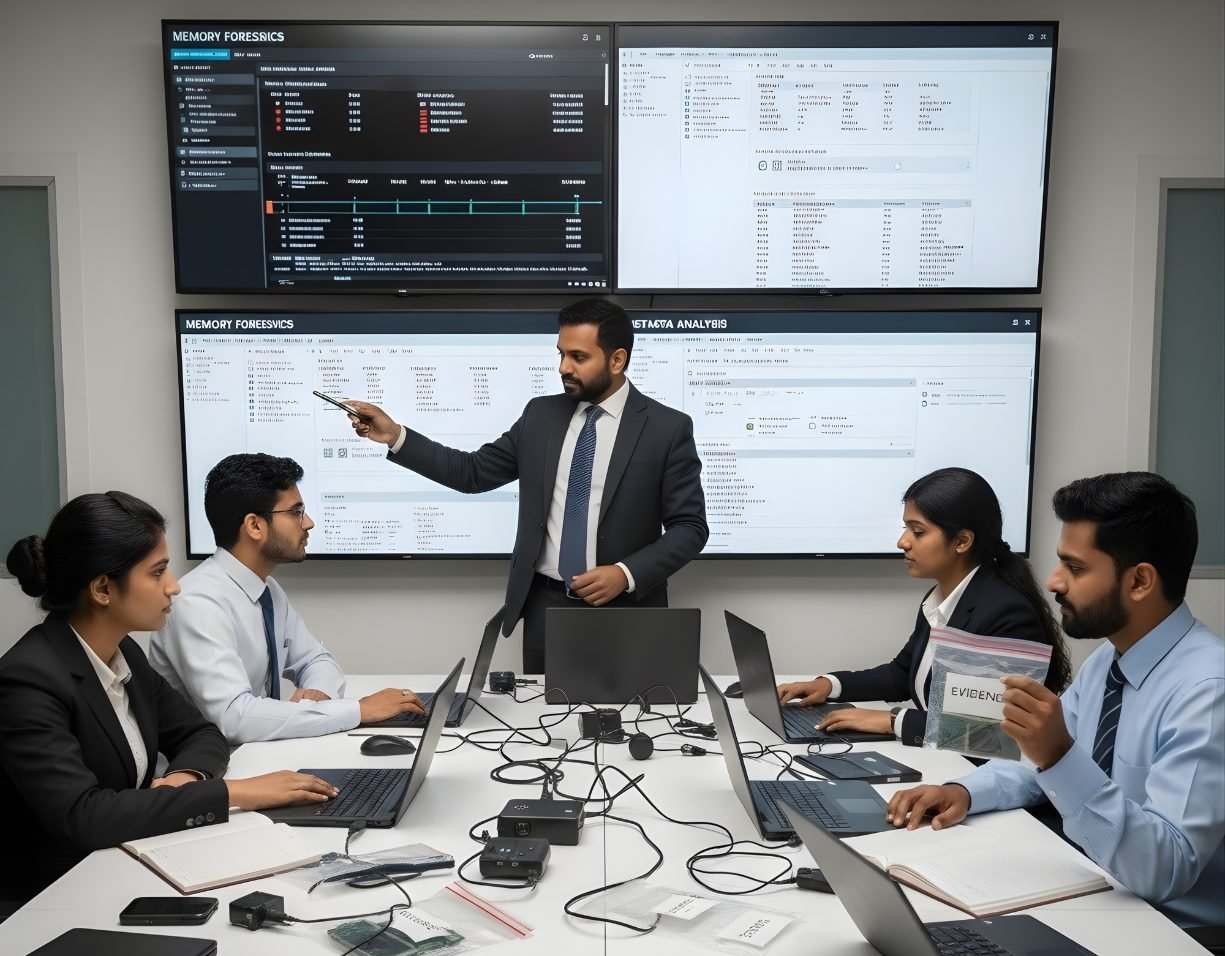
Memory Forensics

Analyzing volatile memory (RAM) to extract running processes, network connections, encryption keys and malware artifacts.

Metadata Analysis

Examination of file metadata to determine origin, modification history and user activity, critical for e-discovery and legal proceedings.

img
N

Network Forensics

The monitoring and analysis of network traffic to identify intrusions, data exfiltration and malicious activities. Tools include packet capture (PCAP) and Wireshark.

O

OSINT (Open Source Intelligence)

Gathering publicly available digital evidence from social media, websites, forums and other online sources to support investigations.

img
R

RAID Forensics

The process of reconstructing and analyzing data from RAID configurations for recovery and investigative purposes.

Ransomware Analysis

Investigating ransomware infections, decrypting files if possible and understanding malware behavior for mitigation.

S

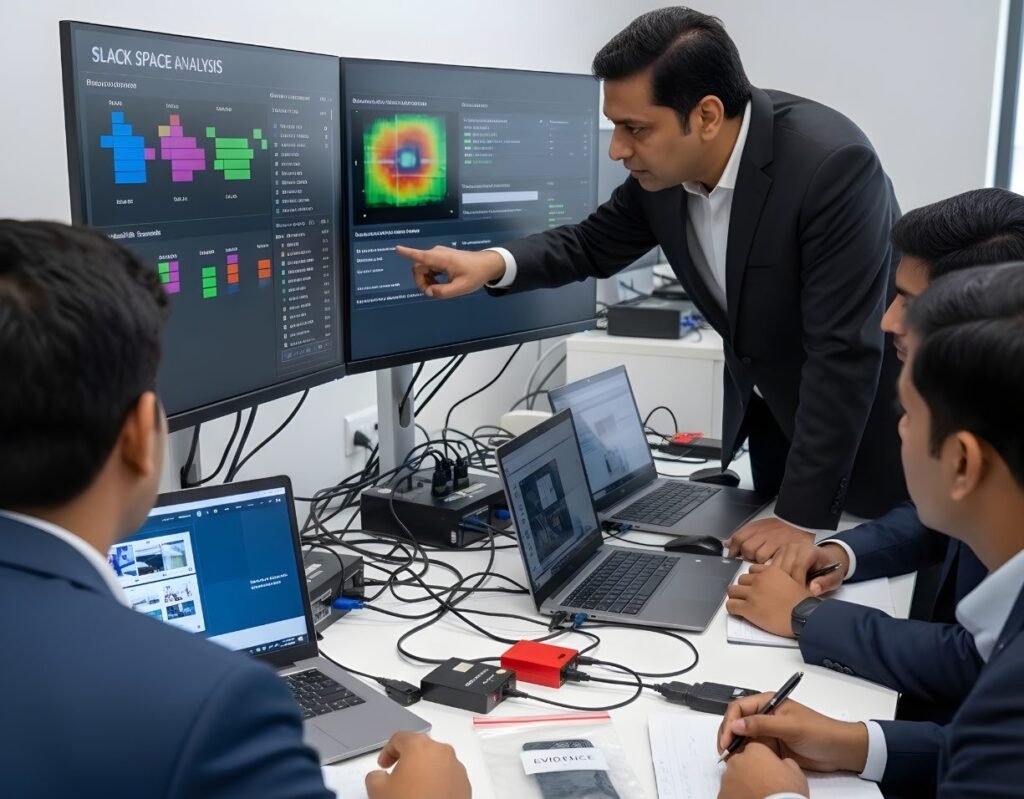
Slack Space

Unused space within a file cluster that may contain remnants of previously deleted files, often revealing hidden evidence.

Steganography

The practice of concealing data within files, images, audio or video. Detecting hidden information is a key aspect of digital forensics.

slack space recover
T

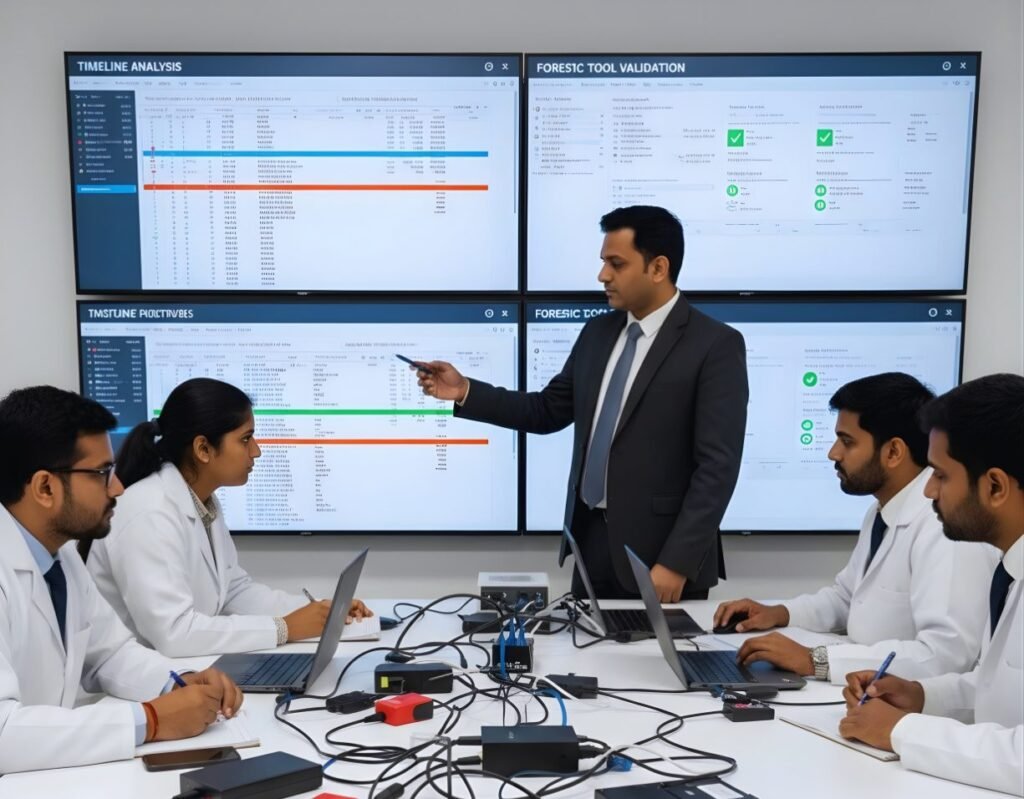
Timeline Analysis

Constructing chronological sequences of digital events from logs, timestamps and metadata to reconstruct actions during an investigation.

Tool Validation

Ensuring forensic tools are tested and validated for accuracy and reliability before being used in investigations or court cases.

V

Virtual Machine Forensics

Examining virtual environments, snapshots and hypervisors to extract evidence without affecting host systems.

W

Write Blocker

Hardware or software tool used to prevent alteration of evidence during forensic acquisition.

Wireshark Analysis

Using Wireshark or similar packet analysis tools to capture and examine network traffic for forensic purposes.

Additional Resources

Explore more terms and concepts in digital storage forensics, mobile & IoT forensics, network & cloud forensics and malware analysis in our in-depth course materials.

DFRTI Glossary is continuously updated to reflect emerging technologies, AI-driven threats and advanced investigative techniques. Bookmark this page as your go-to reference for professional digital forensic terminology.

Get Certificate

Get Quality Skills Certificate From the DFRTI

Get Started Now
img